
Skip to content

Vehicle specifications

Peugeot 307 CC

Compare all 3 engine versions of the Peugeot 307 307 CC, then open the technical data for the exact drivetrain and production year.

Vehicle history report

Buying a used Peugeot 307 CC? Check the history of the exact car

A VIN report can help confirm the exact engine, equipment, mileage records and reported damage before you buy.

What is a VIN?
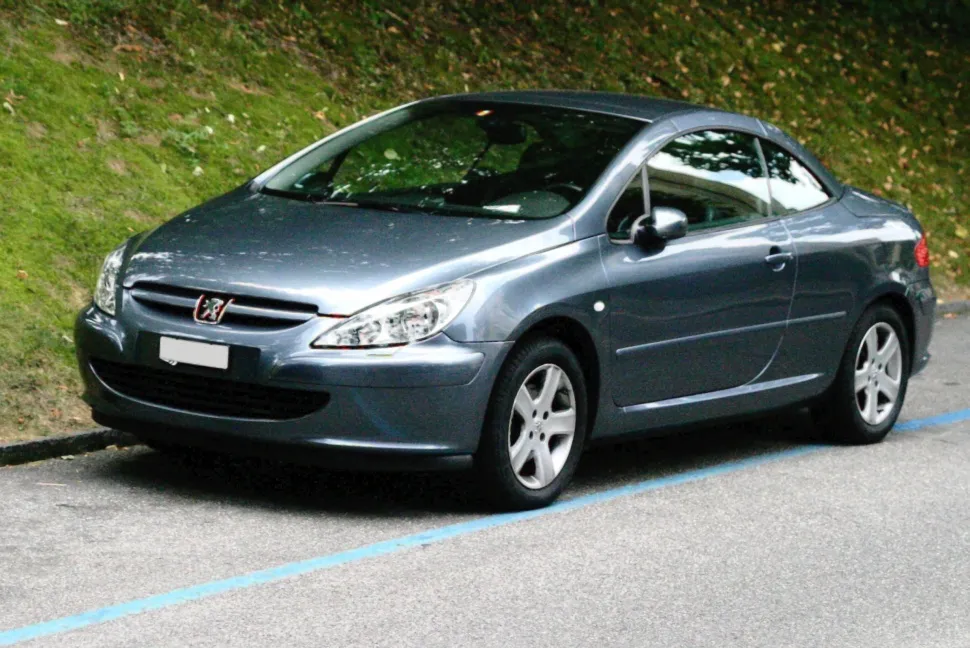
Peugeot 307 307 CC View larger
Photo: Rama [CeCILL (http://www.cecill.info/licences/Licence_CeCILL_V2-en.html) or CC BY-SA 2.0 fr (https://creativecommons.org/licenses/by-sa/2.0/fr/deed.en)], from Wikimedia Commons

Vehicle gallery

Peugeot 307 307 CC

Photo: Rama [CeCILL (http://www.cecill.info/licences/Licence_CeCILL_V2-en.html) or CC BY-SA 2.0 fr (https://creativecommons.org/licenses/by-sa/2.0/fr/deed.en)], from Wikimedia Commons

Choose a drivetrain

Engine versions

Select a row to update the key figures and detailed specifications below.

3 versions · 3 Gasoline

Engine Fuel Power Production
2.0 i 16V (136 KM) Selected Gasoline 136 KM 2003–2005
2.0 i 16V RC (177 KM) Selected Gasoline 177 KM 2003–2005
2.0 i 16V (136 KM) Automatic Selected Gasoline 136 KM 2003–2005

Selected engine version

2.0 i 16V (136 KM)

Gasoline · 2003–2005

Engine power
136 KM
Torque
190 Nm
Engine displacement
1,997 cm³
Fuel type
Gasoline
Acceleration 0-100 km/h
10.9 s
Maximum speed
207 km/h
On this page
Check vehicle history

Basic version information

Brand
Peugeot
Model
307
Version
307 CC
Engine
2.0 i 16V (136 KM)
Engine type
Combustion engine
Number of doors
2
Start of production
2003
End of production
2005
Body type
Coupé - Convertible
Number of seats
4
Fuel type
Gasoline

Performance

Maximum speed
207 km/h
Acceleration 0-100 km/h
10.9 s
Fuel consumption - Urban cycle
11.5 l/100 km
Fuel consumption - Extra-urban cycle
6.2 l/100 km
Fuel consumption - Combined cycle
8.2 l/100 km
Emission standard
Euro 3
CO2 emissions
194 g/km

Engine

Engine model / code
RFNEW10J4
Engine position
Front, Transverse
Engine displacement
1997 cm³
Fuel injection system
Multi-point injection
Engine type
Naturally aspirated engine
Valvetrain
DOHC
Engine configuration
Inline
Number of cylinders
4
Cylinder bore
85 mm
Piston stroke
88 mm
Compression ratio
10.8
Number of valves per cylinder
4
Engine oil capacity
4.25 l
Coolant capacity
6.2 l
Power
136 KM @ 6000 obr./min
Torque
190 Nm @ 4100 obr./min

Volume and weight

Fuel tank
60 l
Aerodynamic drag coefficient (Cx)
0.31
Minimum trunk capacity
205 l
Maximum trunk capacity
350 l
Curb weight
1457 kg
Gross weight
1830 kg
Braked trailer load (12% slope start)
1300 kg
Trailer load without brakes
730 kg

Vehicle dimensions

Length
4349 mm
Width
1759 mm
Height
1417 mm
Wheelbase
2608 mm
Front track
1497 mm
Rear track
1506 mm
Ground clearance
120 mm
Turning circle
11.1 m

Drivetrain, Brakes and suspension

Drive
Front-wheel drive
Number of gears
5
Front suspension
With spring struts
Rear suspension
Steer
Front brakes
Ventilated disc
Rear brakes
Disc
Steering system
Rack-and-pinion
Tire size
205/55 R16
Rim size
16
ABS
yes

Selected engine version

2.0 i 16V RC (177 KM)

Gasoline · 2003–2005

Engine power
177 KM
Torque
202 Nm
Engine displacement
1,997 cm³
Fuel type
Gasoline
Acceleration 0-100 km/h
9.4 s
Maximum speed
205 km/h
On this page
Check vehicle history

Basic version information

Brand
Peugeot
Model
307
Version
307 CC
Engine
2.0 i 16V RC (177 KM)
Engine type
Combustion engine
Number of doors
2
Start of production
2003
End of production
2005
Body type
Coupé - Convertible
Number of seats
4
Fuel type
Gasoline

Performance

Maximum speed
205 km/h
Acceleration 0-100 km/h
9.4 s
Fuel consumption - Urban cycle
12.4 l/100 km
Fuel consumption - Extra-urban cycle
6.8 l/100 km
Fuel consumption - Combined cycle
8.8 l/100 km
Emission standard
Euro 3
CO2 emissions
210 g/km

Engine

Engine model / code
RFKEW10J4S
Engine position
Front, Transverse
Engine displacement
1997 cm³
Fuel injection system
Multi-point injection
Engine type
Naturally aspirated engine
Valvetrain
DOHC
Engine configuration
Inline
Number of cylinders
4
Cylinder bore
85 mm
Piston stroke
88 mm
Compression ratio
11
Number of valves per cylinder
4
Engine oil capacity
5.5 l
Coolant capacity
6.6 l
Power
177 KM @ 7000 obr./min
Torque
202 Nm @ 4750 obr./min

Volume and weight

Fuel tank
60 l
Aerodynamic drag coefficient (Cx)
0.31
Minimum trunk capacity
205 l
Maximum trunk capacity
350 l
Curb weight
1490 kg
Gross weight
1870 kg
Braked trailer load (12% slope start)
1300 kg
Trailer load without brakes
730 kg

Vehicle dimensions

Length
4349 mm
Width
1759 mm
Height
1417 mm
Wheelbase
2608 mm
Front track
1497 mm
Rear track
1506 mm
Ground clearance
120 mm
Turning circle
11.1 m

Drivetrain, Brakes and suspension

Drive
Front-wheel drive
Number of gears
5
Front suspension
With spring struts
Rear suspension
Steer
Front brakes
Ventilated disc
Rear brakes
Disc
Steering system
Rack-and-pinion
Tire size
205/50 R17
Rim size
17
ABS
yes

Selected engine version

2.0 i 16V (136 KM) Automatic

Gasoline · 2003–2005

Engine power
136 KM
Torque
190 Nm
Engine displacement
1,997 cm³
Fuel type
Gasoline
Acceleration 0-100 km/h
12.7 s
Maximum speed
204 km/h
On this page
Check vehicle history

Basic version information

Brand
Peugeot
Model
307
Version
307 CC
Engine
2.0 i 16V (136 KM) Automatic
Engine type
Combustion engine
Number of doors
2
Start of production
2003
End of production
2005
Body type
Coupé - Convertible
Number of seats
4
Fuel type
Gasoline

Performance

Maximum speed
204 km/h
Acceleration 0-100 km/h
12.7 s
Fuel consumption - Urban cycle
13.1 l/100 km
Fuel consumption - Extra-urban cycle
6.4 l/100 km
Fuel consumption - Combined cycle
8.9 l/100 km
Emission standard
Euro 3
CO2 emissions
211 g/km

Engine

Engine model / code
RFNEW10J4
Engine position
Front, Transverse
Engine displacement
1997 cm³
Fuel injection system
Multi-point injection
Engine type
Naturally aspirated engine
Valvetrain
DOHC
Engine configuration
Inline
Number of cylinders
4
Cylinder bore
85 mm
Piston stroke
88 mm
Compression ratio
10.8
Number of valves per cylinder
4
Engine oil capacity
4.25 l
Coolant capacity
6.8 l
Power
136 KM @ 6000 obr./min
Torque
190 Nm @ 4100 obr./min

Volume and weight

Fuel tank
60 l
Aerodynamic drag coefficient (Cx)
0.31
Minimum trunk capacity
205 l
Maximum trunk capacity
350 l
Curb weight
1493 kg
Gross weight
1865 kg
Braked trailer load (12% slope start)
1300 kg
Trailer load without brakes
730 kg

Vehicle dimensions

Length
4349 mm
Width
1759 mm
Height
1417 mm
Wheelbase
2608 mm
Front track
1497 mm
Rear track
1506 mm
Ground clearance
120 mm
Turning circle
11.1 m

Drivetrain, Brakes and suspension

Drive
Front-wheel drive
Number of gears
4
Front suspension
With spring struts
Rear suspension
Steer
Front brakes
Ventilated disc
Rear brakes
Disc
Steering system
Rack-and-pinion
Tire size
205/55 R16
Rim size
16
ABS
yes

About Peugeot 307 307 CC

The Peugeot 307 CC, produced from 2003 to 2005, is an elegant coupé-cabriolet designed for open-air driving enthusiasts who appreciate both classic style and modern solutions. Its two-door body along with seating for four passengers makes it an ideal choice for those wanting to combine a sporty character with luxury travel. The characteristic body lines and solid construction make the 307 CC catch attention wherever it appears, providing an excellent option for those seeking a unique car for recreational drives.

The car offers several engine options, all powered by gasoline. Among the choices are a 2.0-liter 16V RC engine with 177 hp and a 2.0-liter 16V engine with 136 hp, available in both manual and automatic versions. With varying power outputs, the Peugeot 307 CC can satisfy drivers seeking dynamic experiences as well as those prioritizing economical driving. The engine variants provide the right balance between performance and fuel efficiency, enhancing the versatility of this model.

The Peugeot 307 CC features front-wheel drive, which translates to stability and balanced handling. Thanks to its solid suspension construction, the car performs excellently in both urban conditions and on longer journeys, offering high driving comfort. Maneuverability and good visibility are key advantages in city traffic. Additional support systems, such as ABS and ESP, provide extra safety and confidence while driving in various road situations.

Like any model, the 307 CC has its potential drawbacks. Known issues include failures in the folding roof mechanism, which is a critical component for a cabriolet. There are also electronic system failures that affect the functionality of onboard systems. The servicing costs of this model may be higher than those of more popular compact cars, primarily due to specialized components and the less common cabriolet body style in Poland.

In summary, the Peugeot 307 CC is an intriguing choice for enthusiasts of unique design and comfortable cabriolet driving. It stands out from the competition with its elegant lines, dynamic engines, and the pleasure of driving with an open roof. For many buyers who are aware of the potential drawbacks but value the unique experiences it offers, the 307 CC remains an attractive option in the coupé-cabriolet segment.