
Skip to content

Vehicle specifications

Hyundai i30 I CW

Compare all 9 engine versions of the Hyundai i30 i30 I CW, then open the technical data for the exact drivetrain and production year.

Vehicle history report

Buying a used Hyundai i30 I CW? Check the history of the exact car

A VIN report can help confirm the exact engine, equipment, mileage records and reported damage before you buy.

What is a VIN?
1 of 8
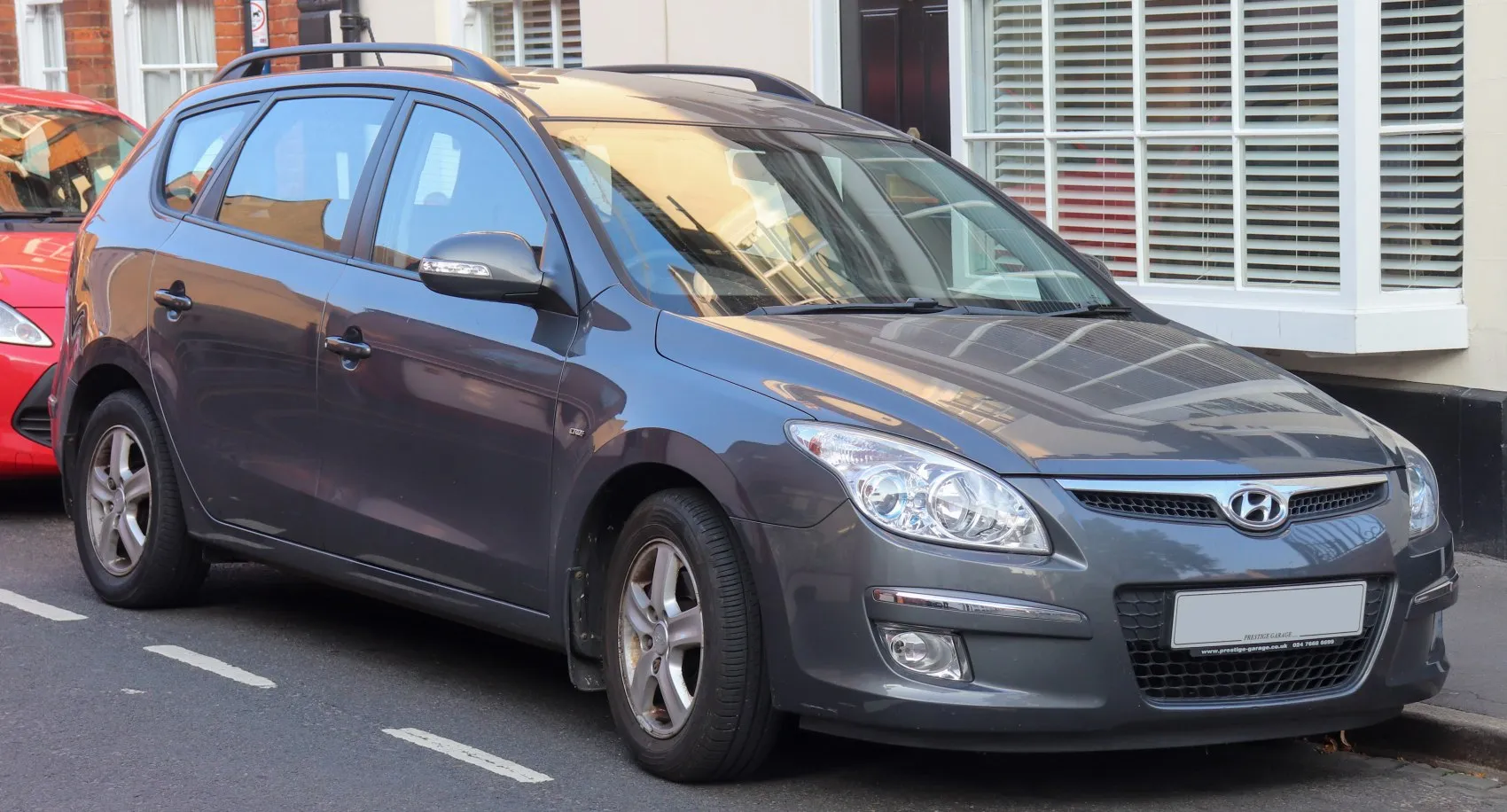
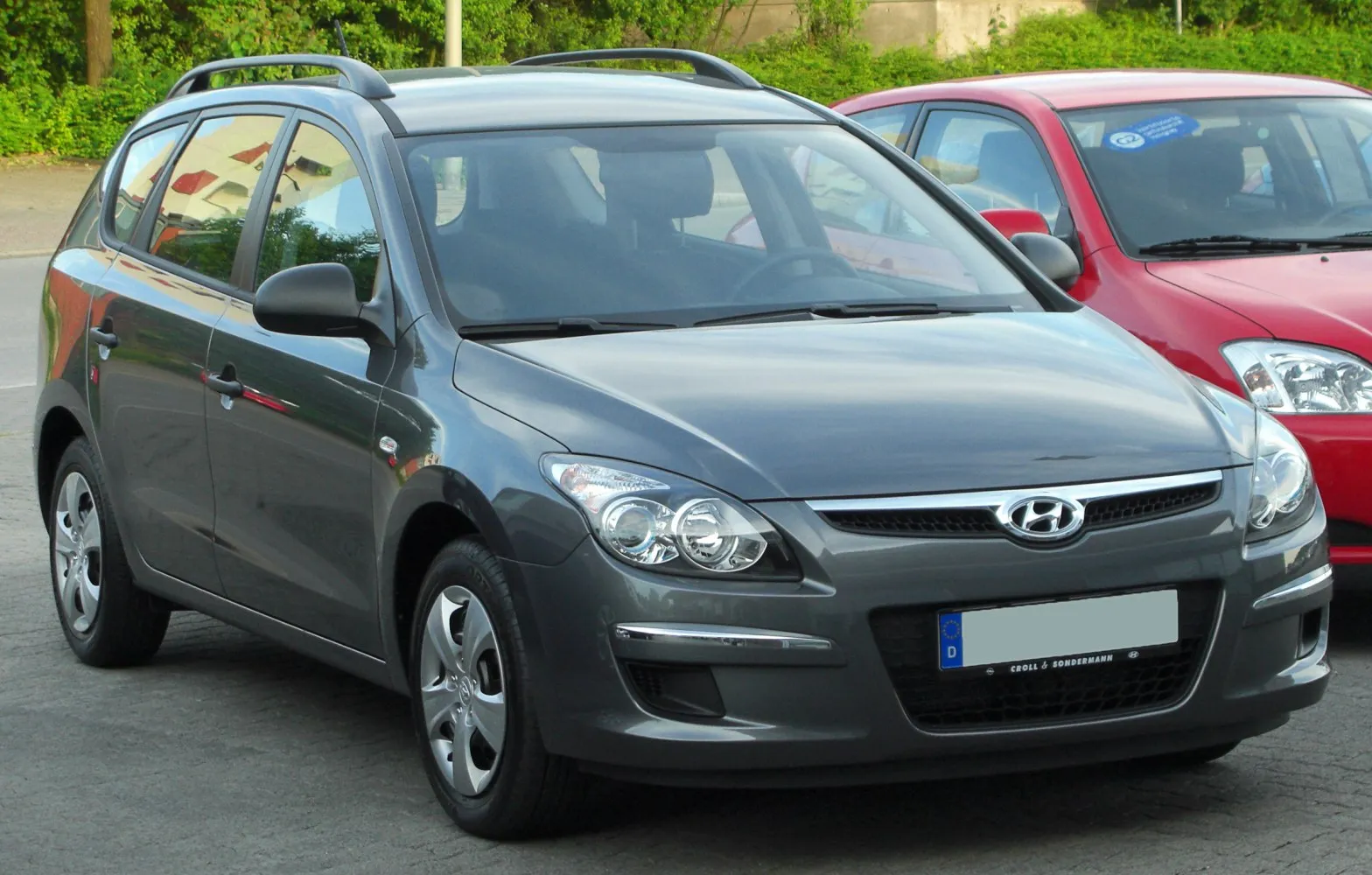
Hyundai i30 i30 I CW View larger
Photo: OSX, Public domain, via Wikimedia Commons

Vehicle gallery

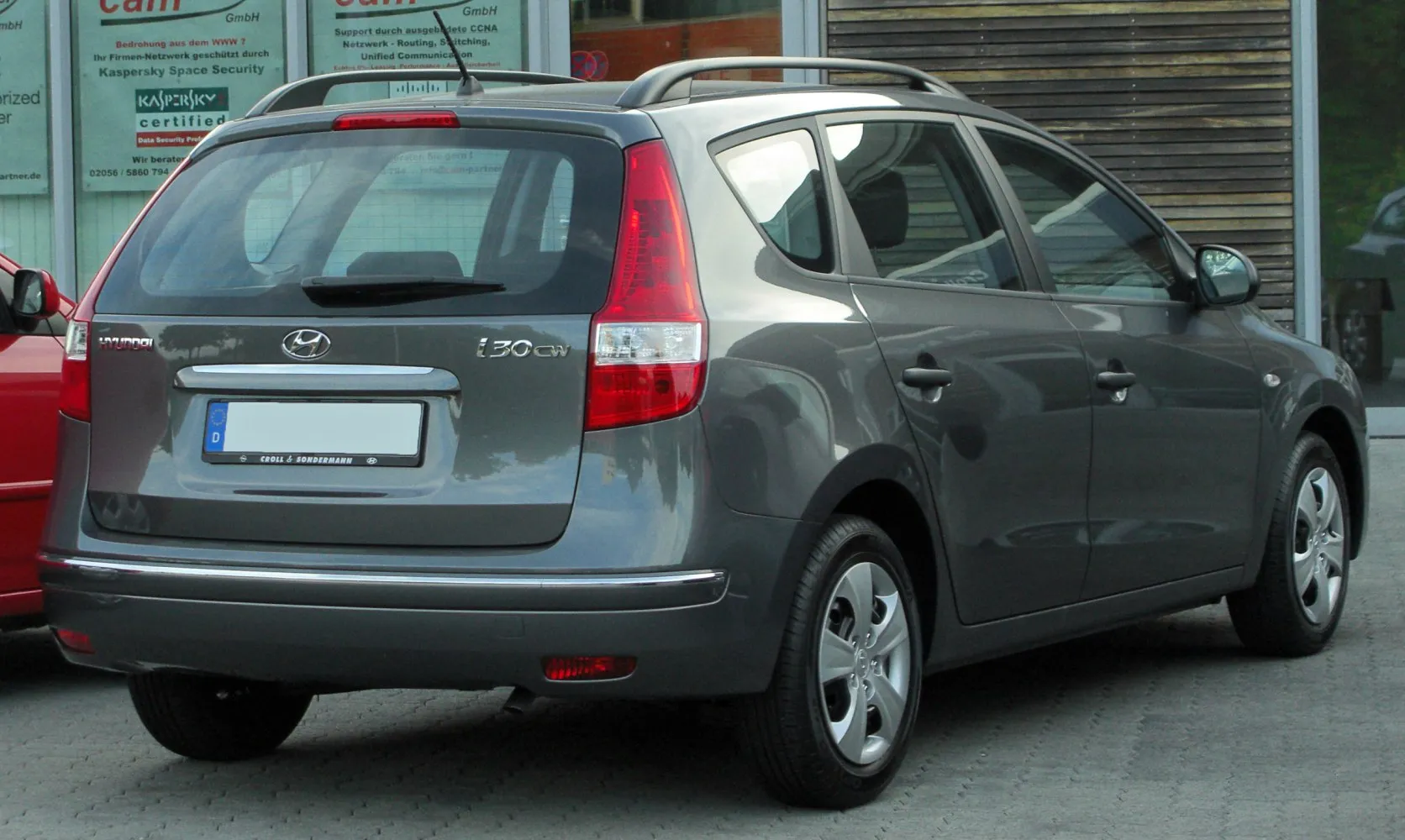
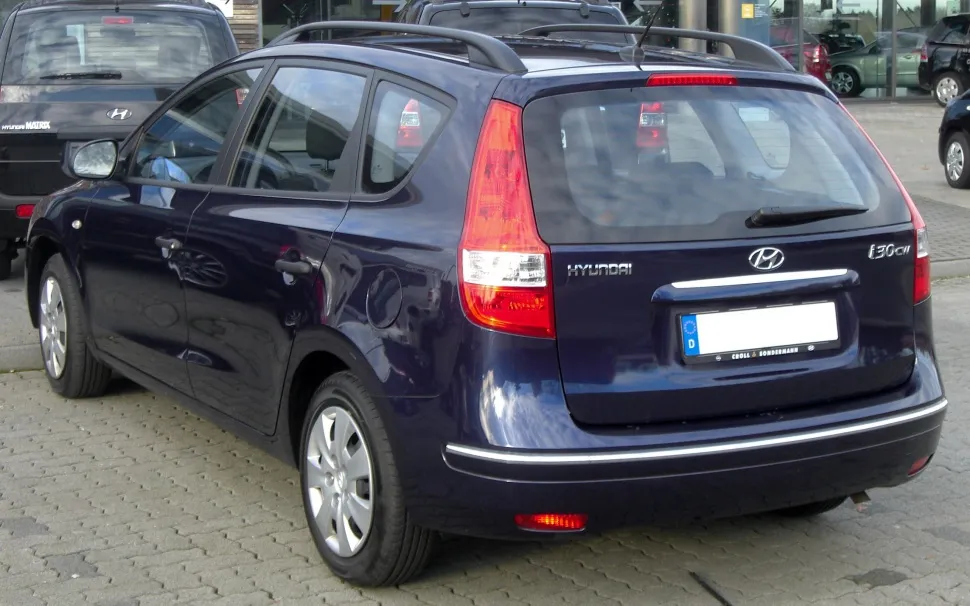
Hyundai i30 i30 I CW

Photo: OSX, Public domain, via Wikimedia Commons

Choose a drivetrain

Engine versions

Select a row to update the key figures and detailed specifications below.

9 versions · 4 Diesel fuel · 5 Gasoline

Engine Fuel Power Production
1.6 CRDi (116 KM) Selected Diesel fuel 116 KM 2008–2010
1.6 (126 KM) Automatic Selected Gasoline 126 KM 2008–2010
2.0 (143 KM) Selected Gasoline 143 KM 2008–2010
1.6 (126 KM) Selected Gasoline 126 KM 2008–2010
2.0 (143 KM) Automatic Selected Gasoline 143 KM 2008–2010
2.0 CRDi (140 KM) Selected Diesel fuel 140 KM 2008–2010
1.4 (109 KM) Selected Gasoline 109 KM 2008–2010
1.6 CRDi (90 KM) Selected Diesel fuel 90 KM 2008–2010
1.6 CRDi (116 KM) Automatic Selected Diesel fuel 116 KM 2008–2010

Selected engine version

1.6 CRDi (116 KM)

Diesel fuel · 2008–2010

Engine power
116 KM
Torque
255 Nm
Engine displacement
1,582 cm³
Fuel type
Diesel fuel
Acceleration 0-100 km/h
11.9 s
Maximum speed
188 km/h
On this page
Check vehicle history

Basic version information

Brand
Hyundai
Model
i30
Version
i30 I CW
Engine
1.6 CRDi (116 KM)
Engine type
Combustion engine
Number of doors
5
Start of production
2008
End of production
2010
Body type
Station wagon
Number of seats
5
Fuel type
Diesel fuel

Performance

Maximum speed
188 km/h
Acceleration 0-100 km/h
11.9 s
Fuel consumption - Urban cycle
5.9 l/100 km
Fuel consumption - Extra-urban cycle
4.3 l/100 km
Fuel consumption - Combined cycle
4.9 l/100 km
Emission standard
Euro 4

Engine

Engine model / code
D4FB
Engine position
Front, Transverse
Engine displacement
1582 cm³
Fuel injection system
Diesel common rail
Engine type
Turbocharger, Intercooler
Valvetrain
DOHC
Engine configuration
Inline
Number of cylinders
4
Cylinder bore
77.2 mm
Piston stroke
84.5 mm
Compression ratio
17.3
Number of valves per cylinder
4
Engine oil capacity
5.3 l
Coolant capacity
6.8 l
Power
116 KM @ 4000 obr./min
Torque
255 Nm @ 1900-2750 obr./min

Volume and weight

Fuel tank
53 l
Aerodynamic drag coefficient (Cx)
0.31
Minimum trunk capacity
415 l
Maximum trunk capacity
1395 l
Curb weight
1334 kg
Gross weight
1920 kg

Vehicle dimensions

Length
4475 mm
Width
1775 mm
Height
1565 mm
Wheelbase
2700 mm
Front track
1546 mm
Rear track
1544 mm
Turning circle
10.4 m

Drivetrain, Brakes and suspension

Drive
Front-wheel drive
Number of gears
5
Front suspension
Independent, McPherson type with coil spring and stabilizer bar
Rear suspension
Independent multi-link coil spring suspension with stabilizer
Front brakes
Ventilated disc
Rear brakes
Disc
Steering system
Rack-and-pinion
Tire size
185/65 R15
Rim size
5.5J x 15
ABS
yes

Selected engine version

1.6 (126 KM) Automatic

Gasoline · 2008–2010

Engine power
126 KM
Torque
154 Nm
Engine displacement
1,591 cm³
Fuel type
Gasoline
Acceleration 0-100 km/h
12 s
Maximum speed
183 km/h
On this page
Check vehicle history

Basic version information

Brand
Hyundai
Model
i30
Version
i30 I CW
Engine
1.6 (126 KM) Automatic
Engine type
Combustion engine
Number of doors
5
Start of production
2008
End of production
2010
Body type
Station wagon
Number of seats
5
Fuel type
Gasoline

Performance

Maximum speed
183 km/h
Acceleration 0-100 km/h
12 s
Fuel consumption - Urban cycle
9 l/100 km
Fuel consumption - Extra-urban cycle
5.7 l/100 km
Fuel consumption - Combined cycle
6.9 l/100 km
Emission standard
Euro 4

Engine

Engine model / code
G4FC
Engine position
Front, Transverse
Engine displacement
1591 cm³
Fuel injection system
Multi-point injection
Engine type
Naturally aspirated engine
Valvetrain
DOHC
Engine configuration
Inline
Number of cylinders
4
Cylinder bore
77 mm
Piston stroke
85.4 mm
Compression ratio
10.5
Number of valves per cylinder
4
Engine oil capacity
3.3 l
Coolant capacity
6 l
Power
126 KM @ 6200 obr./min
Torque
154 Nm @ 4200 obr./min

Volume and weight

Fuel tank
53 l
Aerodynamic drag coefficient (Cx)
0.31
Minimum trunk capacity
415 l
Maximum trunk capacity
1395 l
Curb weight
1256 kg
Gross weight
1840 kg

Vehicle dimensions

Length
4475 mm
Width
1775 mm
Height
1565 mm
Wheelbase
2700 mm
Front track
1546 mm
Rear track
1544 mm
Turning circle
10.4 m

Drivetrain, Brakes and suspension

Drive
Front-wheel drive
Number of gears
4
Front suspension
Independent, McPherson type with coil spring and stabilizer bar
Rear suspension
Independent multi-link coil spring suspension with stabilizer
Front brakes
Ventilated disc
Rear brakes
Disc
Steering system
Rack-and-pinion
Tire size
185/65 R15 H
Rim size
15
ABS
yes

Selected engine version

2.0 (143 KM)

Gasoline · 2008–2010

Engine power
143 KM
Torque
186 Nm
Engine displacement
1,975 cm³
Fuel type
Gasoline
Acceleration 0-100 km/h
11.1 s
Maximum speed
205 km/h
On this page
Check vehicle history

Basic version information

Brand
Hyundai
Model
i30
Version
i30 I CW
Engine
2.0 (143 KM)
Engine type
Combustion engine
Number of doors
5
Start of production
2008
End of production
2010
Body type
Station wagon
Number of seats
5
Fuel type
Gasoline

Performance

Maximum speed
205 km/h
Acceleration 0-100 km/h
11.1 s
Fuel consumption - Urban cycle
9.3 l/100 km
Fuel consumption - Extra-urban cycle
5.9 l/100 km
Fuel consumption - Combined cycle
7.1 l/100 km
Emission standard
Euro 4

Engine

Engine model / code
G4GC
Engine position
Front, Transverse
Engine displacement
1975 cm³
Fuel injection system
Multi-point injection
Engine type
Naturally aspirated engine
Valvetrain
DOHC
Engine configuration
Inline
Number of cylinders
4
Cylinder bore
82 mm
Piston stroke
93.5 mm
Compression ratio
10.1
Number of valves per cylinder
4
Engine oil capacity
4 l
Coolant capacity
6.6 l
Power
143 KM @ 6000 obr./min
Torque
186 Nm @ 4600 obr./min

Volume and weight

Fuel tank
53 l
Aerodynamic drag coefficient (Cx)
0.31
Minimum trunk capacity
415 l
Maximum trunk capacity
1395 l
Curb weight
1296 kg
Gross weight
1890 kg

Vehicle dimensions

Length
4475 mm
Width
1775 mm
Height
1565 mm
Wheelbase
2700 mm
Front track
1538 mm
Rear track
1536 mm
Turning circle
10.4 m

Drivetrain, Brakes and suspension

Drive
Front-wheel drive
Number of gears
5
Front suspension
Independent, McPherson type with coil spring and stabilizer bar
Rear suspension
Independent multi-link coil spring suspension with stabilizer
Front brakes
Ventilated disc
Rear brakes
Disc
Steering system
Rack-and-pinion
Tire size
205/55 R16 H
Rim size
16
ABS
yes

Selected engine version

1.6 (126 KM)

Gasoline · 2008–2010

Engine power
126 KM
Torque
154 Nm
Engine displacement
1,591 cm³
Fuel type
Gasoline
Acceleration 0-100 km/h
11.5 s
Maximum speed
192 km/h
On this page
Check vehicle history

Basic version information

Brand
Hyundai
Model
i30
Version
i30 I CW
Engine
1.6 (126 KM)
Engine type
Combustion engine
Number of doors
5
Start of production
2008
End of production
2010
Body type
Station wagon
Number of seats
5
Fuel type
Gasoline

Performance

Maximum speed
192 km/h
Acceleration 0-100 km/h
11.5 s
Fuel consumption - Urban cycle
8 l/100 km
Fuel consumption - Extra-urban cycle
5.2 l/100 km
Fuel consumption - Combined cycle
6.2 l/100 km
Emission standard
Euro 4

Engine

Engine model / code
G4FC
Engine position
Front, Transverse
Engine displacement
1591 cm³
Fuel injection system
Multi-point injection
Engine type
Naturally aspirated engine
Valvetrain
DOHC
Engine configuration
Inline
Number of cylinders
4
Cylinder bore
77 mm
Piston stroke
85.4 mm
Compression ratio
10.5
Number of valves per cylinder
4
Engine oil capacity
3.3 l
Coolant capacity
6 l
Power
126 KM @ 6200 obr./min
Torque
154 Nm @ 4200 obr./min

Volume and weight

Fuel tank
53 l
Aerodynamic drag coefficient (Cx)
0.31
Minimum trunk capacity
415 l
Maximum trunk capacity
1395 l
Curb weight
1236 kg
Gross weight
1820 kg

Vehicle dimensions

Length
4475 mm
Width
1775 mm
Height
1565 mm
Wheelbase
2700 mm
Front track
1546 mm
Rear track
1544 mm
Turning circle
10.4 m

Drivetrain, Brakes and suspension

Drive
Front-wheel drive
Number of gears
5
Front suspension
Independent, McPherson type with coil spring and stabilizer bar
Rear suspension
Independent multi-link coil spring suspension with stabilizer
Front brakes
Ventilated disc
Rear brakes
Disc
Steering system
Rack-and-pinion
Tire size
185/65 R15 H
Rim size
15
ABS
yes

Selected engine version

2.0 (143 KM) Automatic

Gasoline · 2008–2010

Engine power
143 KM
Torque
186 Nm
Engine displacement
1,975 cm³
Fuel type
Gasoline
Acceleration 0-100 km/h
11.1 s
Maximum speed
195 km/h
On this page
Check vehicle history

Basic version information

Brand
Hyundai
Model
i30
Version
i30 I CW
Engine
2.0 (143 KM) Automatic
Engine type
Combustion engine
Number of doors
5
Start of production
2008
End of production
2010
Body type
Station wagon
Number of seats
5
Fuel type
Gasoline

Performance

Maximum speed
195 km/h
Acceleration 0-100 km/h
11.1 s
Fuel consumption - Urban cycle
10.3 l/100 km
Fuel consumption - Extra-urban cycle
6.1 l/100 km
Fuel consumption - Combined cycle
7.6 l/100 km
Emission standard
Euro 4

Engine

Engine model / code
G4GC
Engine position
Front, Transverse
Engine displacement
1975 cm³
Fuel injection system
Multi-point injection
Engine type
Naturally aspirated engine
Valvetrain
DOHC
Engine configuration
Inline
Number of cylinders
4
Cylinder bore
82 mm
Piston stroke
93.5 mm
Compression ratio
10.1
Number of valves per cylinder
4
Engine oil capacity
4 l
Coolant capacity
6.6 l
Power
143 KM @ 6000 obr./min
Torque
186 Nm @ 4600 obr./min

Volume and weight

Fuel tank
53 l
Aerodynamic drag coefficient (Cx)
0.31
Minimum trunk capacity
415 l
Maximum trunk capacity
1395 l
Curb weight
1310 kg
Gross weight
1900 kg

Vehicle dimensions

Length
4475 mm
Width
1775 mm
Height
1565 mm
Wheelbase
2700 mm
Front track
1538 mm
Rear track
1536 mm
Turning circle
10.4 m

Drivetrain, Brakes and suspension

Drive
Front-wheel drive
Number of gears
4
Front suspension
Independent, McPherson type with coil spring and stabilizer bar
Rear suspension
Independent multi-link coil spring suspension with stabilizer
Front brakes
Ventilated disc
Rear brakes
Disc
Steering system
Rack-and-pinion
Tire size
205/55 R16 H
Rim size
16
ABS
yes

Selected engine version

2.0 CRDi (140 KM)

Diesel fuel · 2008–2010

Engine power
140 KM
Torque
305 Nm
Engine displacement
1,991 cm³
Fuel type
Diesel fuel
Acceleration 0-100 km/h
10.7 s
Maximum speed
205 km/h
On this page
Check vehicle history

Basic version information

Brand
Hyundai
Model
i30
Version
i30 I CW
Engine
2.0 CRDi (140 KM)
Engine type
Combustion engine
Number of doors
5
Start of production
2008
End of production
2010
Body type
Station wagon
Number of seats
5
Fuel type
Diesel fuel

Performance

Maximum speed
205 km/h
Acceleration 0-100 km/h
10.7 s
Fuel consumption - Urban cycle
7.2 l/100 km
Fuel consumption - Extra-urban cycle
4.4 l/100 km
Fuel consumption - Combined cycle
5.5 l/100 km
Emission standard
Euro 4

Engine

Engine model / code
D4EA
Engine position
Front, Transverse
Engine displacement
1991 cm³
Fuel injection system
Diesel common rail
Engine type
Turbocharger, Intercooler
Valvetrain
SOHC
Engine configuration
Inline
Number of cylinders
4
Cylinder bore
83 mm
Piston stroke
92 mm
Compression ratio
17.3
Number of valves per cylinder
4
Engine oil capacity
6.7 l
Coolant capacity
7.3 l
Power
140 KM @ 3800 obr./min
Torque
305 Nm @ 1800-2500 obr./min

Volume and weight

Fuel tank
53 l
Aerodynamic drag coefficient (Cx)
0.31
Minimum trunk capacity
415 l
Maximum trunk capacity
1395 l
Curb weight
1381 kg
Gross weight
1970 kg

Vehicle dimensions

Length
4475 mm
Width
1775 mm
Height
1565 mm
Wheelbase
2700 mm
Front track
1538 mm
Rear track
1536 mm
Turning circle
10.4 m

Drivetrain, Brakes and suspension

Drive
Front-wheel drive
Number of gears
6
Front suspension
Independent, McPherson type with coil spring and stabilizer bar
Rear suspension
Independent multi-link coil spring suspension with stabilizer
Front brakes
Ventilated disc
Rear brakes
Disc
Steering system
Rack-and-pinion
Tire size
205/55 R16 H
Rim size
16
ABS
yes

Selected engine version

1.4 (109 KM)

Gasoline · 2008–2010

Engine power
109 KM
Torque
137 Nm
Engine displacement
1,396 cm³
Fuel type
Gasoline
Acceleration 0-100 km/h
12.6 s
Maximum speed
187 km/h
On this page
Check vehicle history

Basic version information

Brand
Hyundai
Model
i30
Version
i30 I CW
Engine
1.4 (109 KM)
Engine type
Combustion engine
Number of doors
5
Start of production
2008
End of production
2010
Body type
Station wagon
Number of seats
5
Fuel type
Gasoline

Performance

Maximum speed
187 km/h
Acceleration 0-100 km/h
12.6 s
Fuel consumption - Urban cycle
8.1 l/100 km
Fuel consumption - Extra-urban cycle
5.3 l/100 km
Fuel consumption - Combined cycle
6.3 l/100 km
Emission standard
Euro 4

Engine

Engine model / code
G4FA
Engine position
Front, Transverse
Engine displacement
1396 cm³
Fuel injection system
Multi-point injection
Engine type
Naturally aspirated engine
Valvetrain
DOHC
Engine configuration
Inline
Number of cylinders
4
Cylinder bore
77 mm
Piston stroke
75 mm
Compression ratio
10.5
Number of valves per cylinder
4
Engine oil capacity
3.3 l
Power
109 KM @ 6200 obr./min
Torque
137 Nm @ 5000 obr./min

Volume and weight

Fuel tank
53 l
Aerodynamic drag coefficient (Cx)
0.31
Minimum trunk capacity
415 l
Maximum trunk capacity
1395 l
Curb weight
1236 kg
Gross weight
1820 kg

Vehicle dimensions

Length
4475 mm
Width
1775 mm
Height
1565 mm
Wheelbase
2700 mm
Front track
1546 mm
Rear track
1544 mm
Turning circle
10.4 m

Drivetrain, Brakes and suspension

Drive
Front-wheel drive
Number of gears
5
Front suspension
Independent, McPherson type with coil spring and stabilizer bar
Rear suspension
Independent multi-link coil spring suspension with stabilizer
Front brakes
Ventilated disc
Rear brakes
Disc
Steering system
Rack-and-pinion
Tire size
185/65 R15 H
Rim size
15
ABS
yes

Selected engine version

1.6 CRDi (90 KM)

Diesel fuel · 2008–2010

Engine power
90 KM
Torque
235 Nm
Engine displacement
1,582 cm³
Fuel type
Diesel fuel
Acceleration 0-100 km/h
14.4 s
Maximum speed
172 km/h
On this page
Check vehicle history

Basic version information

Brand
Hyundai
Model
i30
Version
i30 I CW
Engine
1.6 CRDi (90 KM)
Engine type
Combustion engine
Number of doors
5
Start of production
2008
End of production
2010
Body type
Station wagon
Number of seats
5
Fuel type
Diesel fuel

Performance

Maximum speed
172 km/h
Acceleration 0-100 km/h
14.4 s
Fuel consumption - Urban cycle
5.9 l/100 km
Fuel consumption - Extra-urban cycle
4.3 l/100 km
Fuel consumption - Combined cycle
4.9 l/100 km
Emission standard
Euro 4

Engine

Engine model / code
D4FB
Engine position
Front, Transverse
Engine displacement
1582 cm³
Fuel injection system
Diesel common rail
Engine type
Turbocharger, Intercooler
Valvetrain
DOHC
Engine configuration
Inline
Number of cylinders
4
Cylinder bore
77.2 mm
Piston stroke
84.5 mm
Compression ratio
17.3
Number of valves per cylinder
4
Engine oil capacity
5.3 l
Coolant capacity
6.8 l
Power
90 KM @ 4000 obr./min
Torque
235 Nm @ 1750-2500 obr./min

Volume and weight

Fuel tank
53 l
Aerodynamic drag coefficient (Cx)
0.31
Minimum trunk capacity
415 l
Maximum trunk capacity
1395 l
Curb weight
1334 kg
Gross weight
1920 kg

Vehicle dimensions

Length
4475 mm
Width
1775 mm
Height
1565 mm
Wheelbase
2700 mm
Front track
1546 mm
Rear track
1544 mm
Turning circle
10.4 m

Drivetrain, Brakes and suspension

Drive
Front-wheel drive
Number of gears
5
Front suspension
Independent, McPherson type with coil spring and stabilizer bar
Rear suspension
Independent multi-link coil spring suspension with stabilizer
Front brakes
Ventilated disc
Rear brakes
Disc
Steering system
Rack-and-pinion
Tire size
185/65 R15 H
Rim size
15
ABS
yes

Selected engine version

1.6 CRDi (116 KM) Automatic

Diesel fuel · 2008–2010

Engine power
116 KM
Torque
255 Nm
Engine displacement
1,582 cm³
Fuel type
Diesel fuel
Acceleration 0-100 km/h
13.4 s
Maximum speed
180 km/h
On this page
Check vehicle history

Basic version information

Brand
Hyundai
Model
i30
Version
i30 I CW
Engine
1.6 CRDi (116 KM) Automatic
Engine type
Combustion engine
Number of doors
5
Start of production
2008
End of production
2010
Body type
Station wagon
Number of seats
5
Fuel type
Diesel fuel

Performance

Maximum speed
180 km/h
Acceleration 0-100 km/h
13.4 s
Fuel consumption - Urban cycle
7.4 l/100 km
Fuel consumption - Extra-urban cycle
4.9 l/100 km
Fuel consumption - Combined cycle
5.8 l/100 km
Emission standard
Euro 4

Engine

Engine model / code
D4FB
Engine position
Front, Transverse
Engine displacement
1582 cm³
Fuel injection system
Diesel common rail
Engine type
Turbocharger, Intercooler
Valvetrain
DOHC
Engine configuration
Inline
Number of cylinders
4
Cylinder bore
77.2 mm
Piston stroke
84.5 mm
Compression ratio
17.3
Number of valves per cylinder
4
Engine oil capacity
5.3 l
Coolant capacity
6.8 l
Power
116 KM @ 4000 obr./min
Torque
255 Nm @ 1900-2750 obr./min

Volume and weight

Fuel tank
53 l
Aerodynamic drag coefficient (Cx)
0.31
Minimum trunk capacity
415 l
Maximum trunk capacity
1395 l
Curb weight
1341 kg
Gross weight
1940 kg

Vehicle dimensions

Length
4475 mm
Width
1775 mm
Height
1565 mm
Wheelbase
2700 mm
Front track
1546 mm
Rear track
1544 mm
Turning circle
10.4 m

Drivetrain, Brakes and suspension

Drive
Front-wheel drive
Number of gears
4
Front suspension
Independent, McPherson type with coil spring and stabilizer bar
Rear suspension
Independent multi-link coil spring suspension with stabilizer
Front brakes
Ventilated disc
Rear brakes
Disc
Steering system
Rack-and-pinion
Tire size
185/65 R15
Rim size
5.5J x 15
ABS
yes

About Hyundai i30 i30 I CW

The Hyundai i30 I CW, produced from 2008 to 2010, is a station wagon designed for families and individuals in need of a spacious vehicle. Its five-door construction and capacity for five passengers make it an ideal choice for those who value functionality and practicality. The car's style blends modernity with elegance, making it an attractive option in the compact vehicle market. It is intended for users looking for a reliable car for everyday use and weekend outings.

The i30 I CW model offers a wide range of powertrains that cater to various driver needs. These include engines powered by both petrol and diesel, with power outputs ranging from 90 to 143 hp. Popular choices include the 1.4 petrol engine with 109 hp and the 2.0 CRDi engine with 140 hp. For those who prefer a more dynamic driving experience, there are also 2.0 versions available with 143 hp. The available transmission options for this model include both manual and automatic, allowing for customization according to driver preferences.

The Hyundai i30 I CW is equipped with front-wheel drive, which ensures stable handling and decent traction in most road conditions. The car is characterized by good maneuverability, making it well-suited for urban environments while also providing comfort during longer journeys. Standard equipment often includes driver assistance systems such as ABS and ESP, which further enhance driving safety.

Potential buyers should pay attention to certain drawbacks of this model. There are known cases of electronic issues, particularly regarding the audio system and air conditioning. Some examples may also require attention concerning the wear of suspension components, especially on uneven road surfaces. Diesel engine versions may incur higher servicing costs due to the need for regular replacement of particulate filters.

The Hyundai i30 I CW is a solid choice for those seeking a spacious and functional vehicle with a modern design. Its biggest advantages are driving comfort, a variety of powertrains, and a practical interior. It stands out among competitors by combining reliability with an affordable price, making it an attractive option in the compact station wagon segment.