
Skip to content

Vehicle specifications

Peugeot 307 Station Wagon

Compare all 8 engine versions of the Peugeot 307 307 Station Wagon, then open the technical data for the exact drivetrain and production year.

Vehicle history report

Buying a used Peugeot 307 Station Wagon? Check the history of the exact car

A VIN report can help confirm the exact engine, equipment, mileage records and reported damage before you buy.

What is a VIN?
1 of 2
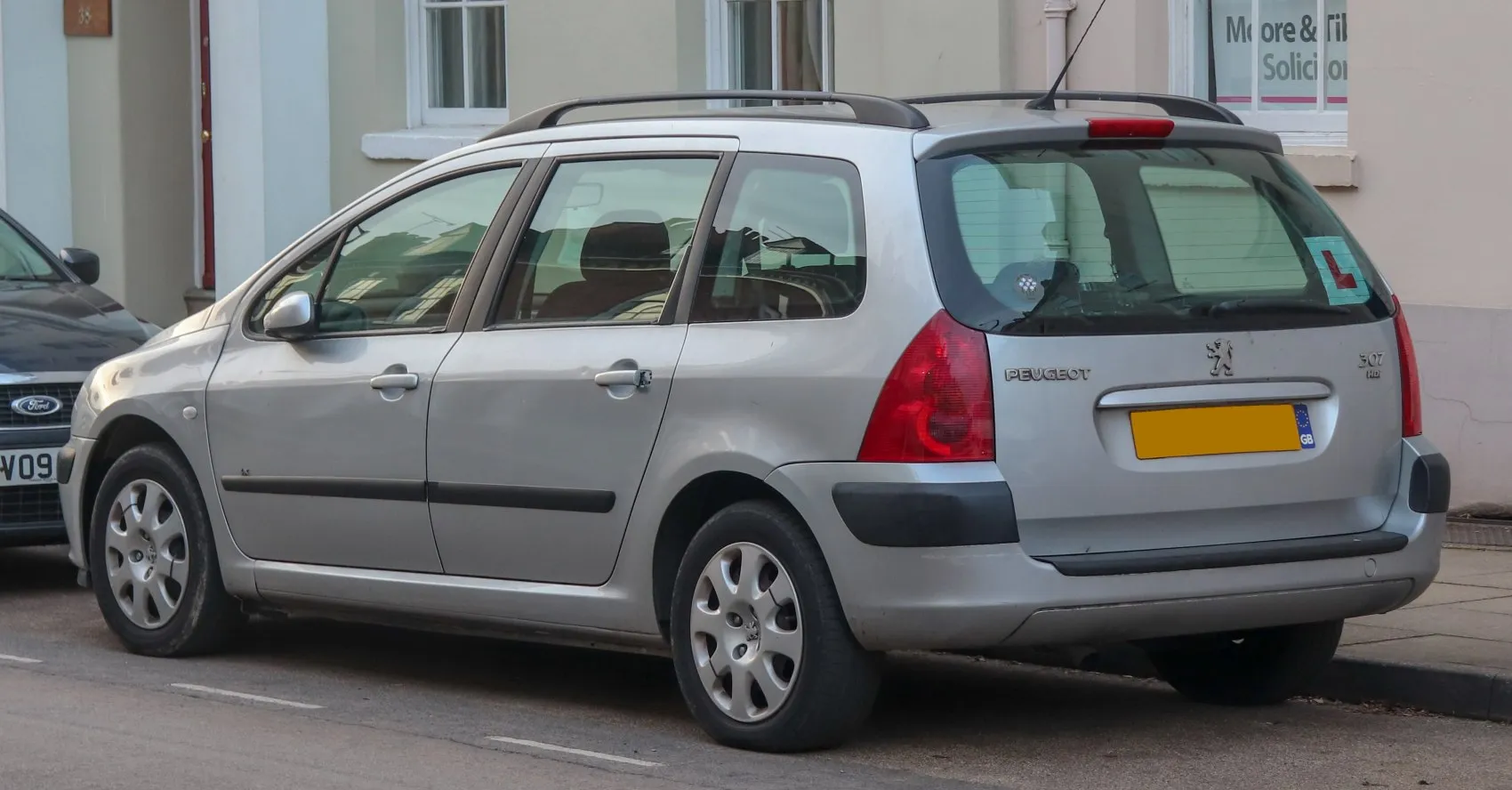
Peugeot 307 307 Station Wagon View larger
Photo: Vauxford, CC BY-SA 4.0 <https://creativecommons.org/licenses/by-sa/4.0>, via Wikimedia Commons

Vehicle gallery

Peugeot 307 307 Station Wagon

Photo: Vauxford, CC BY-SA 4.0 <https://creativecommons.org/licenses/by-sa/4.0>, via Wikimedia Commons

Choose a drivetrain

Engine versions

Select a row to update the key figures and detailed specifications below.

8 versions · 4 Gasoline · 4 Diesel fuel

Engine Fuel Power Production
1.6 16V (109 KM) Selected Gasoline 109 KM 2002–2005
1.6 HDI (109 KM) Selected Diesel fuel 109 KM 2004–2005
2.0 16V (136 KM) Selected Gasoline 136 KM 2002–2005
2.0 HDi (107 KM) Selected Diesel fuel 107 KM 2002–2004
2.0 HDi (90 KM) Selected Diesel fuel 90 KM 2002–2005
2.0 16V (136 KM) Automatic Selected Gasoline 136 KM 2002–2005
1.6 16V (109 KM) Automatic Selected Gasoline 109 KM 2002–2005
2.0 HDi (136 KM) Selected Diesel fuel 136 KM 2005

Selected engine version

1.6 16V (109 KM)

Gasoline · 2002–2005

Engine power
109 KM
Torque
147 Nm
Engine displacement
1,587 cm³
Fuel type
Gasoline
Acceleration 0-100 km/h
11.9 s
Maximum speed
182 km/h
On this page
Check vehicle history

Basic version information

Brand
Peugeot
Model
307
Version
307 Station Wagon
Engine
1.6 16V (109 KM)
Engine type
Combustion engine
Number of doors
5
Start of production
2002
End of production
2005
Body type
Station wagon
Number of seats
5
Fuel type
Gasoline

Performance

Maximum speed
182 km/h
Acceleration 0-100 km/h
11.9 s
Fuel consumption - Urban cycle
9.9 l/100 km
Fuel consumption - Extra-urban cycle
6.3 l/100 km
Fuel consumption - Combined cycle
7.7 l/100 km
Emission standard
Euro 3
CO2 emissions
178 g/km

Engine

Engine model / code
NFUTU5JP4
Engine position
Front, Transverse
Engine displacement
1587 cm³
Fuel injection system
Multi-point injection
Engine type
Naturally aspirated engine
Valvetrain
DOHC
Engine configuration
Inline
Number of cylinders
4
Cylinder bore
78.5 mm
Piston stroke
82 mm
Compression ratio
11
Number of valves per cylinder
4
Engine oil capacity
3.25 l
Coolant capacity
6.2 l
Power
109 KM @ 5800 obr./min
Torque
147 Nm @ 4000 obr./min

Volume and weight

Fuel tank
60 l
Minimum trunk capacity
340 l
Maximum trunk capacity
1540 l
Curb weight
1324 kg
Gross weight
1923 kg
Braked trailer load (12% slope start)
1100 kg
Trailer load without brakes
695 kg

Vehicle dimensions

Length
4419 mm
Width
1757 mm
Height
1534-1544 mm
Wheelbase
2708 mm
Front track
1505 mm
Rear track
1510 mm
Front overhang
878 mm
Rear overhang
833 mm

Drivetrain, Brakes and suspension

Drive
Front-wheel drive
Number of gears
5
Front suspension
With spring struts
Rear suspension
Steer
Front brakes
Ventilated disc
Rear brakes
Disc
Steering system
Rack-and-pinion
Power steering
Hydraulic power steering
Tire size
195/65 R15
Rim size
15
ABS
yes

Selected engine version

1.6 HDI (109 KM)

Diesel fuel · 2004–2005

Engine power
109 KM
Torque
260 Nm
Engine displacement
1,560 cm³
Fuel type
Diesel fuel
Acceleration 0-100 km/h
12 s
Maximum speed
183 km/h
On this page
Check vehicle history

Basic version information

Brand
Peugeot
Model
307
Version
307 Station Wagon
Engine
1.6 HDI (109 KM)
Engine type
Combustion engine
Number of doors
5
Start of production
2004
End of production
2005
Body type
Station wagon
Number of seats
5
Fuel type
Diesel fuel

Performance

Maximum speed
183 km/h
Acceleration 0-100 km/h
12 s
Fuel consumption - Urban cycle
6.2 l/100 km
Fuel consumption - Extra-urban cycle
4.4 l/100 km
Fuel consumption - Combined cycle
5 l/100 km
Emission standard
Euro 4
CO2 emissions
131 g/km

Engine

Engine model / code
9HZDV6TED4
Engine position
Front, Transverse
Engine displacement
1560 cm³
Fuel injection system
Diesel common rail
Engine type
Turbocharger, Intercooler
Valvetrain
DOHC
Engine configuration
Inline
Number of cylinders
4
Cylinder bore
75 mm
Piston stroke
88.3 mm
Compression ratio
17.6
Number of valves per cylinder
4
Engine oil capacity
3.8 l
Coolant capacity
6.5 l
Power
109 KM @ 4000 obr./min
Torque
260 Nm @ 1750 obr./min

Volume and weight

Fuel tank
60 l
Minimum trunk capacity
340 l
Maximum trunk capacity
1540 l
Curb weight
1402 kg
Gross weight
2050 kg
Braked trailer load (12% slope start)
1200 kg
Trailer load without brakes
700 kg

Vehicle dimensions

Length
4419 mm
Width
1757 mm
Height
1544 mm
Wheelbase
2708 mm
Front track
1505 mm
Rear track
1510 mm
Front overhang
878 mm
Rear overhang
833 mm

Drivetrain, Brakes and suspension

Drive
Front-wheel drive
Number of gears
5
Front suspension
With spring struts
Rear suspension
Steer
Front brakes
Ventilated disc
Rear brakes
Disc
Steering system
Rack-and-pinion
Power steering
Hydraulic power steering
Tire size
195/65 R15
Rim size
15
ABS
yes

Selected engine version

2.0 16V (136 KM)

Gasoline · 2002–2005

Engine power
136 KM
Torque
190 Nm
Engine displacement
1,997 cm³
Fuel type
Gasoline
Acceleration 0-100 km/h
10.5 s
Maximum speed
200 km/h
On this page
Check vehicle history

Basic version information

Brand
Peugeot
Model
307
Version
307 Station Wagon
Engine
2.0 16V (136 KM)
Engine type
Combustion engine
Number of doors
5
Start of production
2002
End of production
2005
Body type
Station wagon
Number of seats
5
Fuel type
Gasoline

Performance

Maximum speed
200 km/h
Acceleration 0-100 km/h
10.5 s
Fuel consumption - Urban cycle
11.5 l/100 km
Fuel consumption - Extra-urban cycle
6.3 l/100 km
Fuel consumption - Combined cycle
8.3 l/100 km
Emission standard
Euro 3
CO2 emissions
194 g/km

Engine

Engine model / code
RFNEW10J4
Engine position
Front, Transverse
Engine displacement
1997 cm³
Fuel injection system
Multi-point injection
Engine type
Naturally aspirated engine
Engine configuration
Inline
Number of cylinders
4
Cylinder bore
85 mm
Piston stroke
88 mm
Compression ratio
10.8
Number of valves per cylinder
4
Engine oil capacity
4.25 l
Coolant capacity
6.2 l
Power
136 KM @ 6000 obr./min
Torque
190 Nm @ 4100 obr./min

Volume and weight

Fuel tank
60 l
Minimum trunk capacity
340 l
Maximum trunk capacity
1540 l
Curb weight
1355 kg
Gross weight
1941 kg
Braked trailer load (12% slope start)
1500 kg
Trailer load without brakes
715 kg

Vehicle dimensions

Length
4419 mm
Width
1757 mm
Height
1534-1544 mm
Wheelbase
2708 mm
Front track
1505 mm
Rear track
1510 mm
Front overhang
878 mm
Rear overhang
833 mm

Drivetrain, Brakes and suspension

Drive
Front-wheel drive
Number of gears
5
Front suspension
With spring struts
Rear suspension
Steer
Front brakes
Ventilated disc
Rear brakes
Disc
Steering system
Rack-and-pinion
Power steering
Hydraulic power steering
Tire size
195/65 R15
Rim size
15
ABS
yes

Selected engine version

2.0 HDi (107 KM)

Diesel fuel · 2002–2004

Engine power
107 KM
Torque
250 Nm
Engine displacement
1,997 cm³
Fuel type
Diesel fuel
Acceleration 0-100 km/h
12.7 s
Maximum speed
183 km/h
On this page
Check vehicle history

Basic version information

Brand
Peugeot
Model
307
Version
307 Station Wagon
Engine
2.0 HDi (107 KM)
Engine type
Combustion engine
Number of doors
5
Start of production
2002
End of production
2004
Body type
Station wagon
Number of seats
5
Fuel type
Diesel fuel

Performance

Maximum speed
183 km/h
Acceleration 0-100 km/h
12.7 s
Fuel consumption - Urban cycle
7.2 l/100 km
Fuel consumption - Extra-urban cycle
4.4 l/100 km
Fuel consumption - Combined cycle
5.4 l/100 km
Emission standard
Euro 3
CO2 emissions
142 g/km

Engine

Engine model / code
RHSDW10ATED
Engine position
Front, Transverse
Engine displacement
1997 cm³
Fuel injection system
Diesel common rail
Engine type
Turbocharger, Intercooler
Valvetrain
SOHC
Engine configuration
Inline
Number of cylinders
4
Cylinder bore
85 mm
Piston stroke
88 mm
Compression ratio
17.6
Number of valves per cylinder
2
Engine oil capacity
4.8 l
Coolant capacity
8.3 l
Power
107 KM @ 4000 obr./min
Torque
250 Nm @ 1750 obr./min

Volume and weight

Fuel tank
60 l
Minimum trunk capacity
340 l
Maximum trunk capacity
1540 l
Curb weight
1421 kg
Gross weight
2016 kg
Braked trailer load (12% slope start)
1500 kg
Trailer load without brakes
745 kg

Vehicle dimensions

Length
4419 mm
Width
1757 mm
Height
1534-1544 mm
Wheelbase
2708 mm
Front track
1505 mm
Rear track
1510 mm
Front overhang
878 mm
Rear overhang
833 mm

Drivetrain, Brakes and suspension

Drive
Front-wheel drive
Number of gears
5
Front suspension
With spring struts
Rear suspension
Steer
Front brakes
Ventilated disc
Rear brakes
Disc
Steering system
Rack-and-pinion
Power steering
Hydraulic power steering
Tire size
205/55 R15
Rim size
15
ABS
yes

Selected engine version

2.0 HDi (90 KM)

Diesel fuel · 2002–2005

Engine power
90 KM
Torque
205 Nm
Engine displacement
1,997 cm³
Fuel type
Diesel fuel
Acceleration 0-100 km/h
13.7 s
Maximum speed
174 km/h
On this page
Check vehicle history

Basic version information

Brand
Peugeot
Model
307
Version
307 Station Wagon
Engine
2.0 HDi (90 KM)
Engine type
Combustion engine
Number of doors
5
Start of production
2002
End of production
2005
Body type
Station wagon
Number of seats
5
Fuel type
Diesel fuel

Performance

Maximum speed
174 km/h
Acceleration 0-100 km/h
13.7 s
Fuel consumption - Urban cycle
7.1 l/100 km
Fuel consumption - Extra-urban cycle
4.5 l/100 km
Fuel consumption - Combined cycle
5.4 l/100 km
Emission standard
Euro 3
CO2 emissions
143 g/km

Engine

Engine model / code
RHYDW10TD
Engine position
Front, Transverse
Engine displacement
1997 cm³
Fuel injection system
Diesel common rail
Engine type
Turbocharger, Intercooler
Valvetrain
SOHC
Engine configuration
Inline
Number of cylinders
4
Cylinder bore
85 mm
Piston stroke
88 mm
Compression ratio
17.6
Number of valves per cylinder
2
Engine oil capacity
4.8 l
Coolant capacity
8.3 l
Power
90 KM @ 4000 obr./min
Torque
205 Nm @ 1900 obr./min

Volume and weight

Fuel tank
60 l
Minimum trunk capacity
340 l
Maximum trunk capacity
1540 l
Curb weight
1390 kg
Gross weight
1984 kg
Braked trailer load (12% slope start)
1500 kg
Trailer load without brakes
730 kg

Vehicle dimensions

Length
4419 mm
Width
1757 mm
Height
1534-1544 mm
Wheelbase
2708 mm
Front track
1505 mm
Rear track
1510 mm
Front overhang
878 mm
Rear overhang
833 mm

Drivetrain, Brakes and suspension

Drive
Front-wheel drive
Number of gears
5
Front suspension
With spring struts
Rear suspension
Steer
Front brakes
Ventilated disc
Rear brakes
Disc
Steering system
Rack-and-pinion
Power steering
Hydraulic power steering
Tire size
195/65 R15
Rim size
15
ABS
yes

Selected engine version

2.0 16V (136 KM) Automatic

Gasoline · 2002–2005

Engine power
136 KM
Torque
190 Nm
Engine displacement
1,997 cm³
Fuel type
Gasoline
Acceleration 0-100 km/h
11.5 s
Maximum speed
200 km/h
On this page
Check vehicle history

Basic version information

Brand
Peugeot
Model
307
Version
307 Station Wagon
Engine
2.0 16V (136 KM) Automatic
Engine type
Combustion engine
Number of doors
5
Start of production
2002
End of production
2005
Body type
Station wagon
Number of seats
5
Fuel type
Gasoline

Performance

Maximum speed
200 km/h
Acceleration 0-100 km/h
11.5 s
Fuel consumption - Urban cycle
13.1 l/100 km
Fuel consumption - Extra-urban cycle
6.5 l/100 km
Fuel consumption - Combined cycle
8.8 l/100 km
Emission standard
Euro 3
CO2 emissions
206 g/km

Engine

Engine model / code
RFNEW10J4
Engine position
Front, Transverse
Engine displacement
1997 cm³
Fuel injection system
Multi-point injection
Engine type
Naturally aspirated engine
Engine configuration
Inline
Number of cylinders
4
Cylinder bore
85 mm
Piston stroke
88 mm
Compression ratio
10.8
Number of valves per cylinder
4
Engine oil capacity
4.25 l
Coolant capacity
6.8 l
Power
136 KM @ 6000 obr./min
Torque
190 Nm @ 4100 obr./min

Volume and weight

Fuel tank
60 l
Minimum trunk capacity
340 l
Maximum trunk capacity
1540 l
Curb weight
1391 kg
Gross weight
1977 kg
Braked trailer load (12% slope start)
1500 kg
Trailer load without brakes
730 kg

Vehicle dimensions

Length
4419 mm
Width
1757 mm
Height
1534-1544 mm
Wheelbase
2708 mm
Front track
1505 mm
Rear track
1510 mm
Front overhang
878 mm
Rear overhang
833 mm

Drivetrain, Brakes and suspension

Drive
Front-wheel drive
Number of gears
4
Front suspension
With spring struts
Rear suspension
Steer
Front brakes
Ventilated disc
Rear brakes
Disc
Steering system
Rack-and-pinion
Power steering
Hydraulic power steering
Tire size
195/65 R15
Rim size
15
ABS
yes

Selected engine version

1.6 16V (109 KM) Automatic

Gasoline · 2002–2005

Engine power
109 KM
Torque
147 Nm
Engine displacement
1,587 cm³
Fuel type
Gasoline
Acceleration 0-100 km/h
13.8 s
Maximum speed
180 km/h
On this page
Check vehicle history

Basic version information

Brand
Peugeot
Model
307
Version
307 Station Wagon
Engine
1.6 16V (109 KM) Automatic
Engine type
Combustion engine
Number of doors
5
Start of production
2002
End of production
2005
Body type
Station wagon
Number of seats
5
Fuel type
Gasoline

Performance

Maximum speed
180 km/h
Acceleration 0-100 km/h
13.8 s
Fuel consumption - Urban cycle
11.2 l/100 km
Fuel consumption - Extra-urban cycle
6.4 l/100 km
Fuel consumption - Combined cycle
8.3 l/100 km
Emission standard
Euro 3
CO2 emissions
194 g/km

Engine

Engine model / code
NFUTU5JP4
Engine position
Front, Transverse
Engine displacement
1587 cm³
Fuel injection system
Multi-point injection
Engine type
Naturally aspirated engine
Valvetrain
DOHC
Engine configuration
Inline
Number of cylinders
4
Cylinder bore
78.5 mm
Piston stroke
82 mm
Compression ratio
11
Number of valves per cylinder
4
Engine oil capacity
3.25 l
Coolant capacity
6.7 l
Power
109 KM @ 5800 obr./min
Torque
147 Nm @ 4000 obr./min

Volume and weight

Fuel tank
60 l
Minimum trunk capacity
340 l
Maximum trunk capacity
1540 l
Curb weight
1360 kg
Gross weight
1959 kg
Braked trailer load (12% slope start)
1100 kg
Trailer load without brakes
715 kg

Vehicle dimensions

Length
4419 mm
Width
1757 mm
Height
1534-1544 mm
Wheelbase
2708 mm
Front track
1505 mm
Rear track
1510 mm
Front overhang
878 mm
Rear overhang
833 mm

Drivetrain, Brakes and suspension

Drive
Front-wheel drive
Number of gears
4
Front suspension
With spring struts
Rear suspension
Steer
Front brakes
Ventilated disc
Rear brakes
Disc
Steering system
Rack-and-pinion
Power steering
Hydraulic power steering
Tire size
195/65 R15
Rim size
15
ABS
yes

Selected engine version

2.0 HDi (136 KM)

Diesel fuel · 2005

Engine power
136 KM
Torque
320 Nm
Engine displacement
1,997 cm³
Fuel type
Diesel fuel
Acceleration 0-100 km/h
10.8 s
Maximum speed
197 km/h
On this page
Check vehicle history

Basic version information

Brand
Peugeot
Model
307
Version
307 Station Wagon
Engine
2.0 HDi (136 KM)
Engine type
Combustion engine
Number of doors
5
Start of production
2005
End of production
2005
Body type
Station wagon
Number of seats
5
Fuel type
Diesel fuel

Performance

Maximum speed
197 km/h
Acceleration 0-100 km/h
10.8 s
Fuel consumption - Urban cycle
7.3 l/100 km
Fuel consumption - Extra-urban cycle
4.7 l/100 km
Fuel consumption - Combined cycle
5.6 l/100 km
Emission standard
Euro 4
CO2 emissions
148 g/km

Engine

Engine model / code
RHRDW10BTED4
Engine position
Front, Transverse
Engine displacement
1997 cm³
Fuel injection system
Diesel common rail
Engine type
Turbocharger, Intercooler
Valvetrain
DOHC
Engine configuration
Inline
Number of cylinders
4
Cylinder bore
85 mm
Piston stroke
88 mm
Compression ratio
17.6
Number of valves per cylinder
4
Engine oil capacity
5.25 l
Coolant capacity
8.1 l
Power
136 KM @ 4000 obr./min
Torque
320 Nm @ 2000 obr./min

Volume and weight

Fuel tank
60 l
Minimum trunk capacity
340 l
Maximum trunk capacity
1540 l
Curb weight
1492 kg
Gross weight
2075 kg
Braked trailer load (12% slope start)
1400 kg
Trailer load without brakes
600 kg

Vehicle dimensions

Length
4419 mm
Width
1757 mm
Height
1534-1544 mm
Wheelbase
2708 mm
Front track
1505 mm
Rear track
1510 mm
Front overhang
878 mm
Rear overhang
833 mm

Drivetrain, Brakes and suspension

Drive
Front-wheel drive
Number of gears
6
Front brakes
Ventilated disc
Rear brakes
Disc
Steering system
Rack-and-pinion
Tire size
205/55 R16 V
Rim size
16
ABS
yes

About Peugeot 307 307 Station Wagon

The Peugeot 307 Station Wagon, produced from 2002 to 2005, is a five-door estate designed for those who need a spacious and functional family car. This model, with its elegant and practical design, ideally meets the needs of users who value driving comfort and a large boot capacity. The style of the 307 combines modern lines with classic elements, making it still appear attractive despite the passage of time.

The Peugeot 307 Station Wagon offers a variety of engine options, both petrol and diesel, with power ranging from 90 to 136 HP. Among the most popular power units are petrol engines such as the 2.0 16V (136 HP) and diesels like the 1.6 HDi (109 HP) and 2.0 HDi (136 HP). For drivers who value comfort, automatic transmission versions are also available. The wide range of engine power allows for a choice between economical driving and more dynamic performance, making the model versatile.

The car features front-wheel drive, providing good grip and stability on the road. The 307 is agile in handling and performs well in tight urban spaces as well as on longer routes, offering traveling comfort. Standard features include many driver assistance systems, such as ABS, power steering, and an optional cruise control, which enhance driving comfort and safety.

However, it is worth noting some known issues with this model. Users sometimes report problems with the electronics, especially regarding the operation of electrical systems and lighting. Another concern may be the service costs associated with the more complex diesel versions, which may require extra attention and maintenance. When choosing a used model, it is advisable to thoroughly check the technical condition of the selected unit to avoid unexpected expenses.

In summary, the Peugeot 307 Station Wagon is an excellent option for those looking for a spacious and comfortable family car with a reliable drive. Its strong points, such as a roomy interior, diverse power units, and driving comfort, make it stand out among other models in its segment. Thanks to its versatility and functionality, it remains an attractive choice for many drivers.