
Skip to content

Vehicle specifications

Hyundai i30 III Fastback

Compare all 10 engine versions of the Hyundai i30 i30 III Fastback, then open the technical data for the exact drivetrain and production year.

Vehicle history report

Buying a used Hyundai i30 III Fastback? Check the history of the exact car

A VIN report can help confirm the exact engine, equipment, mileage records and reported damage before you buy.

What is a VIN?
1 of 4
Hyundai i30 i30 III Fastback View larger
Photo: © www.Auto-Data.net

Vehicle gallery

Hyundai i30 i30 III Fastback

Photo: © www.Auto-Data.net

Choose a drivetrain

Engine versions

Select a row to update the key figures and detailed specifications below.

10 versions · 8 Gasoline · 2 Diesel fuel

Engine Fuel Power Production
1.4 T-GDI (140 KM) Selected Gasoline 140 KM 2017–2018
1.0 T-GDI (120 KM) Selected Gasoline 120 KM 2017–2018
1.4 T-GDI (140 KM) DCT Selected Gasoline 140 KM 2017–2018
N 2.0 T-GDI (250 KM) Selected Gasoline 250 KM 2018–2020
N Performance 2.0 T-GDI (275 KM) Selected Gasoline 275 KM 2018–2020
1.0 T-GDI (120 KM) Selected Gasoline 120 KM 2018–2020
1.4 T-GDI (140 KM) Selected Gasoline 140 KM 2018–2020
1.4 T-GDI (140 KM) DCT Selected Gasoline 140 KM 2018–2020
1.6 CRDi (136 KM) Selected Diesel fuel 136 KM 2018–2020
1.6 CRDi (136 KM) DCT Selected Diesel fuel 136 KM 2018–2020

Selected engine version

1.4 T-GDI (140 KM)

Gasoline · 2017–2018

Engine power
140 KM
Torque
242 Nm
Engine displacement
1,353 cm³
Fuel type
Gasoline
Acceleration 0-100 km/h
9.2 s
Maximum speed
208 km/h
On this page
Check vehicle history

Basic version information

Brand
Hyundai
Model
i30
Version
i30 III Fastback
Engine
1.4 T-GDI (140 KM)
Engine type
Combustion engine
Number of doors
5
Start of production
2017
End of production
2018
Body type
Fastback
Number of seats
5
Fuel type
Gasoline

Performance

Maximum speed
208 km/h
Acceleration 0-100 km/h
9.2 s
Fuel consumption - Urban cycle
6.7 l/100 km
Fuel consumption - Extra-urban cycle
4.9 l/100 km
Fuel consumption - Combined cycle
5.5 l/100 km
Emission standard
Euro 6
CO2 emissions
129 g/km

Engine

Engine model / code
KappaII/G4LD
Engine position
Front, Transverse
Engine displacement
1353 cm³
Fuel injection system
Direct injection
Engine type
Turbocharger, Intercooler
Valvetrain
DOHC
Engine configuration
Inline
Number of cylinders
4
Cylinder bore
71.6 mm
Piston stroke
84 mm
Compression ratio
10
Number of valves per cylinder
4
Engine oil capacity
4.2 l
Coolant capacity
6.1 l
Power
140 KM @ 6000 obr./min
Torque
242 Nm @ 1500 obr./min

Volume and weight

Fuel tank
50 l
Minimum trunk capacity
450 l
Maximum trunk capacity
1351 l
Curb weight
1255-1409 kg
Gross weight
1840 kg

Vehicle dimensions

Length
4455 mm
Width
1795 mm
Height
1425 mm
Wheelbase
2650 mm
Ground clearance
135 mm
Front overhang
905 mm
Rear overhang
900 mm
Turning circle
10.6 m

Drivetrain, Brakes and suspension

Drive
Front-wheel drive
Number of gears
6
Front suspension
Independent McPherson type
Rear suspension
Independent multi-link suspension
Front brakes
Ventilated disc
Rear brakes
Disc
Steering system
Rack-and-pinion
Power steering
Electric power steering
Tire size
225/45 R17; 225/40 ZR18
Rim size
7.0J x 17; 7.5J x 18
ABS
yes

Selected engine version

1.0 T-GDI (120 KM)

Gasoline · 2017–2018

Engine power
120 KM
Torque
171 Nm
Engine displacement
998 cm³
Fuel type
Gasoline
Acceleration 0-100 km/h
11.5 s
Maximum speed
188 km/h
On this page
Check vehicle history

Basic version information

Brand
Hyundai
Model
i30
Version
i30 III Fastback
Engine
1.0 T-GDI (120 KM)
Engine type
Combustion engine
Number of doors
5
Start of production
2017
End of production
2018
Body type
Fastback
Number of seats
5
Fuel type
Gasoline

Performance

Maximum speed
188 km/h
Acceleration 0-100 km/h
11.5 s
Fuel consumption - Urban cycle
6 l/100 km
Fuel consumption - Extra-urban cycle
4.6 l/100 km
Fuel consumption - Combined cycle
5.2 l/100 km
Emission standard
Euro 6
CO2 emissions
120 g/km

Engine

Engine model / code
KappaII/G3LC
Engine position
Front, Transverse
Engine displacement
998 cm³
Fuel injection system
Direct injection
Engine type
Turbocharger, Intercooler
Valvetrain
DOHC
Engine configuration
Inline
Number of cylinders
3
Cylinder bore
71 mm
Piston stroke
84 mm
Compression ratio
10.1
Number of valves per cylinder
4
Engine oil capacity
3.6 l
Coolant capacity
6 l
Power
120 KM @ 6000 obr./min
Torque
171 Nm @ 1500-4000 obr./min

Volume and weight

Fuel tank
50 l
Minimum trunk capacity
450 l
Maximum trunk capacity
1351 l
Curb weight
1242-1385 kg
Gross weight
1820 kg

Vehicle dimensions

Length
4455 mm
Width
1795 mm
Height
1425 mm
Wheelbase
2650 mm
Ground clearance
135 mm
Front overhang
905 mm
Rear overhang
900 mm
Turning circle
10.6 m

Drivetrain, Brakes and suspension

Drive
Front-wheel drive
Number of gears
6
Front suspension
Independent McPherson type
Rear suspension
Independent multi-link suspension
Front brakes
Ventilated disc
Rear brakes
Disc
Steering system
Rack-and-pinion
Power steering
Electric power steering
Tire size
225/45 R17; 225/40 ZR18
Rim size
7.0J x 17; 7.5J x 18
ABS
yes

Selected engine version

1.4 T-GDI (140 KM) DCT

Gasoline · 2017–2018

Engine power
140 KM
Torque
242 Nm
Engine displacement
1,353 cm³
Fuel type
Gasoline
Acceleration 0-100 km/h
9.5 s
Maximum speed
203 km/h
On this page
Check vehicle history

Basic version information

Brand
Hyundai
Model
i30
Version
i30 III Fastback
Engine
1.4 T-GDI (140 KM) DCT
Engine type
Combustion engine
Number of doors
5
Start of production
2017
End of production
2018
Body type
Fastback
Number of seats
5
Fuel type
Gasoline

Performance

Maximum speed
203 km/h
Acceleration 0-100 km/h
9.5 s
Fuel consumption - Urban cycle
6.3 l/100 km
Fuel consumption - Extra-urban cycle
4.9 l/100 km
Fuel consumption - Combined cycle
5.4 l/100 km
Emission standard
Euro 6
CO2 emissions
125 g/km

Engine

Engine model / code
KappaII/G4LD
Engine position
Front, Transverse
Engine displacement
1353 cm³
Fuel injection system
Direct injection
Engine type
Turbocharger, Intercooler
Valvetrain
DOHC
Engine configuration
Inline
Number of cylinders
4
Cylinder bore
71.6 mm
Piston stroke
84 mm
Compression ratio
10
Number of valves per cylinder
4
Engine oil capacity
4.2 l
Coolant capacity
6.1 l
Power
140 KM @ 6000 obr./min
Torque
242 Nm @ 1500 obr./min

Volume and weight

Fuel tank
50 l
Minimum trunk capacity
450 l
Maximum trunk capacity
1351 l
Curb weight
1287-1439 kg
Gross weight
1860 kg

Vehicle dimensions

Length
4455 mm
Width
1795 mm
Height
1425 mm
Wheelbase
2650 mm
Ground clearance
135 mm
Front overhang
905 mm
Rear overhang
900 mm
Turning circle
10.6 m

Drivetrain, Brakes and suspension

Drive
Front-wheel drive
Number of gears
7
Type of automatic gearbox
DCT
Front suspension
Independent McPherson type
Rear suspension
Independent multi-link suspension
Front brakes
Ventilated disc
Rear brakes
Disc
Steering system
Rack-and-pinion
Power steering
Electric power steering
Tire size
225/45 R17; 225/40 ZR18
Rim size
7.0J x 17; 7.5J x 18
ABS
yes

Selected engine version

N 2.0 T-GDI (250 KM)

Gasoline · 2018–2020

Engine power
250 KM
Torque
353 Nm
Engine displacement
1,998 cm³
Fuel type
Gasoline
Acceleration 0-100 km/h
6.4 s
Maximum speed
250 km/h
On this page
Check vehicle history

Basic version information

Brand
Hyundai
Model
i30
Version
i30 III Fastback
Engine
N 2.0 T-GDI (250 KM)
Engine type
Combustion engine
Number of doors
5
Start of production
2018
End of production
2020
Body type
Fastback
Number of seats
5
Fuel type
Gasoline

Performance

Maximum speed
250 km/h
Acceleration 0-100 km/h
6.4 s
Fuel consumption - Urban cycle
10.7 l/100 km
Fuel consumption - Extra-urban cycle
5.9 l/100 km
Fuel consumption - Combined cycle
7.7 l/100 km
Emission standard
Euro 6d - TEMP
CO2 emissions
176 g/km

Engine

Engine model / code
G4KH
Engine position
Front, Transverse
Engine displacement
1998 cm³
Fuel injection system
Direct injection
Engine type
Turbocharger, Intercooler
Valvetrain
DOHC, E-CVVT
Engine configuration
Inline
Number of cylinders
4
Cylinder bore
86 mm
Piston stroke
86 mm
Compression ratio
9.5
Number of valves per cylinder
4
Engine oil capacity
4.8 l
Coolant capacity
8.5 l
Power
250 KM @ 6000 obr./min
Torque
353 Nm @ 1450-4000 obr./min

Volume and weight

Fuel tank
50 l
Minimum trunk capacity
436 l
Maximum trunk capacity
1351 l
Curb weight
kg

Vehicle dimensions

Length
4455 mm
Width
1795 mm
Height
1417-1419 mm
Wheelbase
2650 mm
Ground clearance
132 mm
Front overhang
905 mm
Rear overhang
900 mm
Turning circle
10.6 m

Drivetrain, Brakes and suspension

Drive
Front-wheel drive
Number of gears
6
Front suspension
Independent McPherson type
Rear suspension
Independent multi-link suspension
Front brakes
Ventilated disc
Rear brakes
Disc
Steering system
Rack-and-pinion
Power steering
Electric power steering
Tire size
225/40 R18; 235/35 R19
Rim size
18; 19
ABS
yes

Selected engine version

N Performance 2.0 T-GDI (275 KM)

Gasoline · 2018–2020

Engine power
275 KM
Torque
353 Nm
Engine displacement
1,998 cm³
Fuel type
Gasoline
Acceleration 0-100 km/h
6.1 s
Maximum speed
250 km/h
On this page
Check vehicle history

Basic version information

Brand
Hyundai
Model
i30
Version
i30 III Fastback
Engine
N Performance 2.0 T-GDI (275 KM)
Engine type
Combustion engine
Number of doors
5
Start of production
2018
End of production
2020
Body type
Fastback
Number of seats
5
Fuel type
Gasoline

Performance

Maximum speed
250 km/h
Acceleration 0-100 km/h
6.1 s
Fuel consumption - Urban cycle
10.6 l/100 km
Fuel consumption - Extra-urban cycle
6.1 l/100 km
Fuel consumption - Combined cycle
7.8 l/100 km
Emission standard
Euro 6d - TEMP
CO2 emissions
178 g/km

Engine

Engine model / code
G4KH
Engine position
Front, Transverse
Engine displacement
1998 cm³
Fuel injection system
Direct injection
Engine type
Turbocharger, Intercooler
Valvetrain
DOHC, E-CVVT
Engine configuration
Inline
Number of cylinders
4
Cylinder bore
86 mm
Piston stroke
86 mm
Compression ratio
9.5
Number of valves per cylinder
4
Engine oil capacity
4.8 l
Coolant capacity
8.5 l
Power
275 KM @ 6000 obr./min
Torque
353 Nm @ 1450-4700 obr./min

Volume and weight

Fuel tank
50 l
Minimum trunk capacity
450 l
Maximum trunk capacity
1351 l
Curb weight
1441-1520 kg
Gross weight
1950 kg
Roof load
80 kg
Braked trailer load (12% slope start)
1600 kg
Trailer load without brakes
700 kg
Trailer nose weight
80 kg

Vehicle dimensions

Length
4455 mm
Width
1795 mm
Height
1417-1419 mm
Wheelbase
2650 mm
Front track
1556 mm
Rear track
1564 mm
Ground clearance
132 mm
Front overhang
905 mm
Rear overhang
900 mm
Turning circle
10.6 m

Drivetrain, Brakes and suspension

Drive
Front-wheel drive
Number of gears
6
Front suspension
Independent McPherson type
Rear suspension
Independent multi-link suspension
Front brakes
Ventilated disc
Front brake disc/drum diameter
345 mm
Rear brakes
Ventilated disc
Rear brake disc/drum diameter
314 mm
Steering system
Rack-and-pinion
Power steering
Electric power steering
Tire size
225/40 R18; 235/35 R19
Rim size
18; 19
ABS
yes

Selected engine version

1.0 T-GDI (120 KM)

Gasoline · 2018–2020

Engine power
120 KM
Torque
171 Nm
Engine displacement
998 cm³
Fuel type
Gasoline
Acceleration 0-100 km/h
11.3 s
Maximum speed
188 km/h
On this page
Check vehicle history

Basic version information

Brand
Hyundai
Model
i30
Version
i30 III Fastback
Engine
1.0 T-GDI (120 KM)
Engine type
Combustion engine
Number of doors
5
Start of production
2018
End of production
2020
Body type
Fastback
Number of seats
5
Fuel type
Gasoline

Performance

Maximum speed
188 km/h
Acceleration 0-100 km/h
11.3 s
Fuel consumption - Urban cycle
6.5 l/100 km
Fuel consumption - Extra-urban cycle
4.9 l/100 km
Fuel consumption - Combined cycle
5.5 l/100 km
Emission standard
Euro 6d - TEMP
CO2 emissions
126 g/km

Engine

Engine model / code
KappaII/G3LC
Engine position
Front, Transverse
Engine displacement
998 cm³
Fuel injection system
Direct injection
Engine type
Turbocharger, Intercooler
Engine configuration
Inline
Number of cylinders
3
Cylinder bore
71 mm
Piston stroke
84 mm
Number of valves per cylinder
4
Engine oil capacity
3.6 l
Coolant capacity
6 l
Power
120 KM @ 6000 obr./min
Torque
171 Nm @ 1500-4000 obr./min

Volume and weight

Fuel tank
50 l
Minimum trunk capacity
450 l
Maximum trunk capacity
1351 l
Curb weight
1242-1385 kg
Gross weight
1820 kg
Roof load
80 kg
Braked trailer load (12% slope start)
1200 kg
Trailer nose weight
80 kg

Vehicle dimensions

Length
4455 mm
Width
1795 mm
Height
1425 mm
Wheelbase
2650 mm
Front track
1559-1555 mm
Rear track
1567-1563 mm
Ground clearance
135 mm
Front overhang
905 mm
Rear overhang
900 mm

Drivetrain, Brakes and suspension

Drive
Front-wheel drive
Number of gears
6
Front brakes
Ventilated disc
Rear brakes
Disc
Steering system
Rack-and-pinion
Power steering
Electric power steering
ABS
yes

Selected engine version

1.4 T-GDI (140 KM)

Gasoline · 2018–2020

Engine power
140 KM
Torque
242 Nm
Engine displacement
1,353 cm³
Fuel type
Gasoline
Acceleration 0-100 km/h
9.1 s
Maximum speed
208 km/h
On this page
Check vehicle history

Basic version information

Brand
Hyundai
Model
i30
Version
i30 III Fastback
Engine
1.4 T-GDI (140 KM)
Engine type
Combustion engine
Number of doors
5
Start of production
2018
End of production
2020
Body type
Fastback
Number of seats
5
Fuel type
Gasoline

Performance

Maximum speed
208 km/h
Acceleration 0-100 km/h
9.1 s
Fuel consumption - Urban cycle
7.2 l/100 km
Fuel consumption - Extra-urban cycle
5.1 l/100 km
Fuel consumption - Combined cycle
5.9 l/100 km
Emission standard
Euro 6d - TEMP
CO2 emissions
134 g/km

Engine

Engine model / code
KappaII/G4LD
Engine position
Front, Transverse
Engine displacement
1353 cm³
Fuel injection system
Direct injection
Engine type
Turbocharger, Intercooler
Engine configuration
Inline
Number of cylinders
4
Cylinder bore
71.6 mm
Piston stroke
84 mm
Number of valves per cylinder
4
Engine oil capacity
4.2 l
Coolant capacity
6.1 l
Power
140 KM @ 6000 obr./min
Torque
242 Nm @ 1500 obr./min

Volume and weight

Fuel tank
50 l
Minimum trunk capacity
450 l
Maximum trunk capacity
1351 l
Curb weight
1255-1409 kg
Gross weight
1840 kg
Roof load
80 kg
Braked trailer load (12% slope start)
1410 kg
Trailer nose weight
80 kg

Vehicle dimensions

Length
4455 mm
Width
1795 mm
Height
1425 mm
Wheelbase
2650 mm
Front track
1559-1555 mm
Rear track
1567-1563 mm
Ground clearance
135 mm
Front overhang
905 mm
Rear overhang
900 mm

Drivetrain, Brakes and suspension

Drive
Front-wheel drive
Number of gears
6
Front brakes
Ventilated disc
Rear brakes
Disc
Steering system
Rack-and-pinion
Power steering
Electric power steering
ABS
yes

Selected engine version

1.4 T-GDI (140 KM) DCT

Gasoline · 2018–2020

Engine power
140 KM
Torque
242 Nm
Engine displacement
1,353 cm³
Fuel type
Gasoline
Acceleration 0-100 km/h
9.4 s
Maximum speed
203 km/h
On this page
Check vehicle history

Basic version information

Brand
Hyundai
Model
i30
Version
i30 III Fastback
Engine
1.4 T-GDI (140 KM) DCT
Engine type
Combustion engine
Number of doors
5
Start of production
2018
End of production
2020
Body type
Fastback
Number of seats
5
Fuel type
Gasoline

Performance

Maximum speed
203 km/h
Acceleration 0-100 km/h
9.4 s
Fuel consumption - Urban cycle
6.7 l/100 km
Fuel consumption - Extra-urban cycle
5.1 l/100 km
Fuel consumption - Combined cycle
5.7 l/100 km
Emission standard
Euro 6d - TEMP
CO2 emissions
130 g/km

Engine

Engine model / code
KappaII/G4LD
Engine position
Front, Transverse
Engine displacement
1353 cm³
Fuel injection system
Direct injection
Engine type
Turbocharger, Intercooler
Engine configuration
Inline
Number of cylinders
4
Cylinder bore
71.6 mm
Piston stroke
84 mm
Number of valves per cylinder
4
Engine oil capacity
4.2 l
Coolant capacity
6.1 l
Power
140 KM @ 6000 obr./min
Torque
242 Nm @ 1500 obr./min

Volume and weight

Fuel tank
50 l
Minimum trunk capacity
450 l
Maximum trunk capacity
1351 l
Curb weight
1287-1439 kg
Gross weight
1860 kg
Roof load
80 kg
Braked trailer load (12% slope start)
1410 kg
Trailer nose weight
80 kg

Vehicle dimensions

Length
4455 mm
Width
1795 mm
Height
1425 mm
Wheelbase
2650 mm
Front track
1559-1555 mm
Rear track
1567-1563 mm
Ground clearance
135 mm
Front overhang
905 mm
Rear overhang
900 mm

Drivetrain, Brakes and suspension

Drive
Front-wheel drive
Number of gears
7
Type of automatic gearbox
DCT
Front brakes
Ventilated disc
Rear brakes
Disc
Steering system
Rack-and-pinion
Power steering
Electric power steering
ABS
yes

Selected engine version

1.6 CRDi (136 KM)

Diesel fuel · 2018–2020

Engine power
136 KM
Torque
280 Nm
Engine displacement
1,598 cm³
Fuel type
Diesel fuel
Acceleration 0-100 km/h
10.4 s
Maximum speed
200 km/h
On this page
Check vehicle history

Basic version information

Brand
Hyundai
Model
i30
Version
i30 III Fastback
Engine
1.6 CRDi (136 KM)
Engine type
Combustion engine
Number of doors
5
Start of production
2018
End of production
2020
Body type
Fastback
Number of seats
5
Fuel type
Diesel fuel

Performance

Maximum speed
200 km/h
Acceleration 0-100 km/h
10.4 s
Fuel consumption - Urban cycle
4.9 l/100 km
Fuel consumption - Extra-urban cycle
4.2 l/100 km
Fuel consumption - Combined cycle
4.4 l/100 km
Emission standard
Euro 6d - TEMP
CO2 emissions
116 g/km

Engine

Engine model / code
D4FE
Engine position
Front, Transverse
Engine displacement
1598 cm³
Fuel injection system
Diesel common rail
Engine type
Turbocharger, Intercooler
Engine configuration
Inline
Number of cylinders
4
Cylinder bore
77 mm
Piston stroke
85.8 mm
Number of valves per cylinder
4
Engine oil capacity
4.4 l
Coolant capacity
7 l
Power
136 KM @ 4000 obr./min
Torque
280 Nm @ 1500-3000 obr./min

Volume and weight

Fuel tank
50 l
Minimum trunk capacity
450 l
Maximum trunk capacity
1351 l
Curb weight
1335-1487 kg
Gross weight
1900 kg
Roof load
80 kg
Braked trailer load (12% slope start)
1500 kg
Trailer nose weight
80 kg

Vehicle dimensions

Length
4455 mm
Width
1795 mm
Height
1425 mm
Wheelbase
2650 mm
Front track
1559-1555 mm
Rear track
1567-1563 mm
Ground clearance
135 mm
Front overhang
905 mm
Rear overhang
900 mm

Drivetrain, Brakes and suspension

Drive
Front-wheel drive
Number of gears
6
Front brakes
Ventilated disc
Rear brakes
Disc
Steering system
Rack-and-pinion
Power steering
Electric power steering
ABS
yes

Selected engine version

1.6 CRDi (136 KM) DCT

Diesel fuel · 2018–2020

Engine power
136 KM
Torque
320 Nm
Engine displacement
1,598 cm³
Fuel type
Diesel fuel
Acceleration 0-100 km/h
10.1 s
Maximum speed
200 km/h
On this page
Check vehicle history

Basic version information

Brand
Hyundai
Model
i30
Version
i30 III Fastback
Engine
1.6 CRDi (136 KM) DCT
Engine type
Combustion engine
Number of doors
5
Start of production
2018
End of production
2020
Body type
Fastback
Number of seats
5
Fuel type
Diesel fuel

Performance

Maximum speed
200 km/h
Acceleration 0-100 km/h
10.1 s
Fuel consumption - Urban cycle
4.6 l/100 km
Fuel consumption - Extra-urban cycle
4.1 l/100 km
Fuel consumption - Combined cycle
4.3 l/100 km
Emission standard
Euro 6d - TEMP
CO2 emissions
113 g/km

Engine

Engine model / code
D4FE
Engine position
Front, Transverse
Engine displacement
1598 cm³
Fuel injection system
Diesel common rail
Engine type
Turbocharger, Intercooler
Engine configuration
Inline
Number of cylinders
4
Cylinder bore
77 mm
Piston stroke
85.8 mm
Number of valves per cylinder
4
Engine oil capacity
4.4 l
Coolant capacity
7 l
Power
136 KM @ 4000 obr./min
Torque
320 Nm @ 2000-2250 obr./min

Volume and weight

Fuel tank
50 l
Minimum trunk capacity
450 l
Maximum trunk capacity
1351 l
Curb weight
1365-1517 kg
Gross weight
1940 kg
Roof load
80 kg
Braked trailer load (12% slope start)
1500 kg
Trailer nose weight
80 kg

Vehicle dimensions

Length
4455 mm
Width
1795 mm
Height
1425 mm
Wheelbase
2650 mm
Front track
1559-1555 mm
Rear track
1567-1563 mm
Ground clearance
135 mm
Front overhang
905 mm
Rear overhang
900 mm

Drivetrain, Brakes and suspension

Drive
Front-wheel drive
Number of gears
7
Type of automatic gearbox
DCT
Front brakes
Ventilated disc
Rear brakes
Disc
Steering system
Rack-and-pinion
Power steering
Electric power steering
ABS
yes

About Hyundai i30 i30 III Fastback

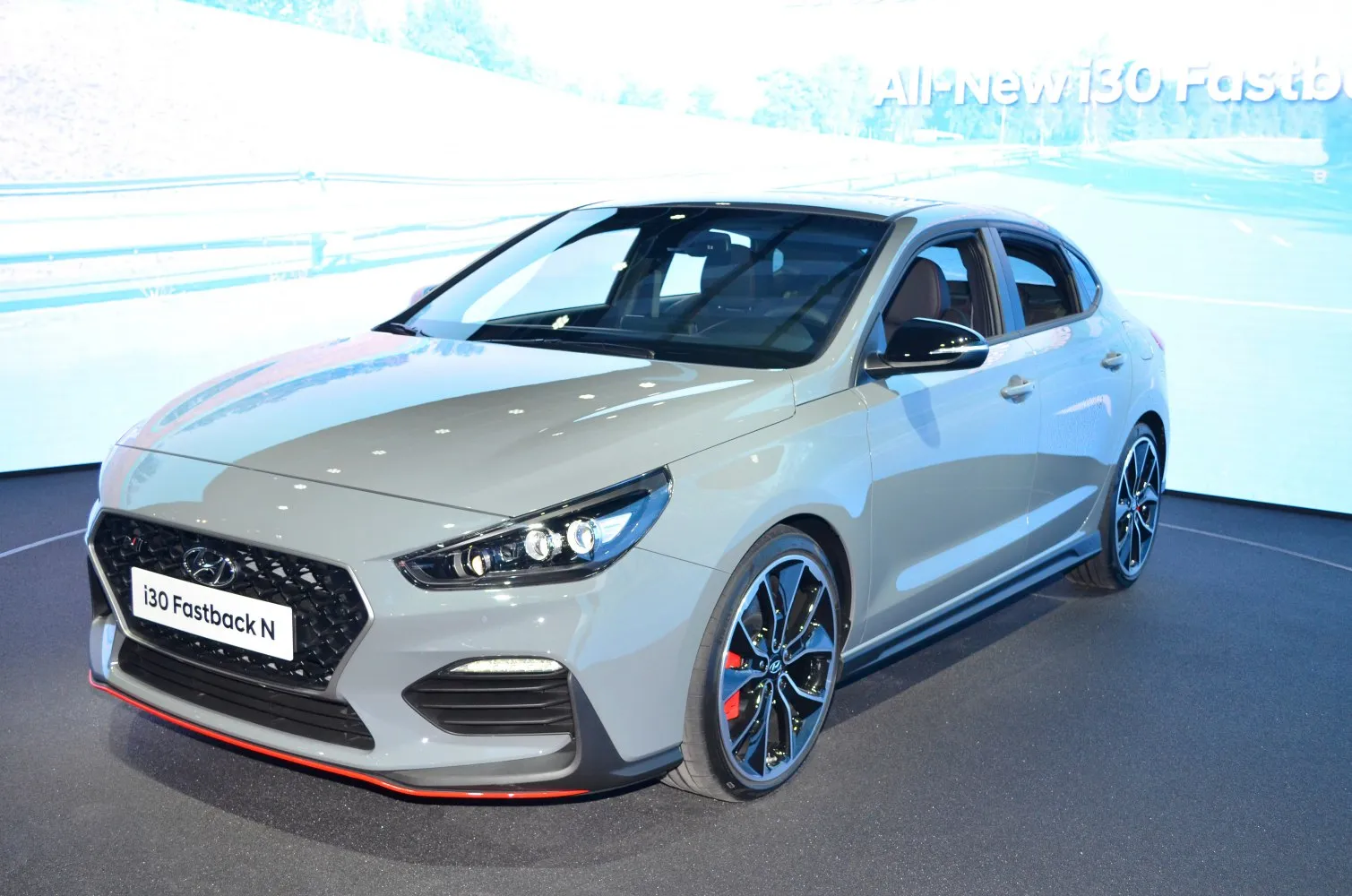
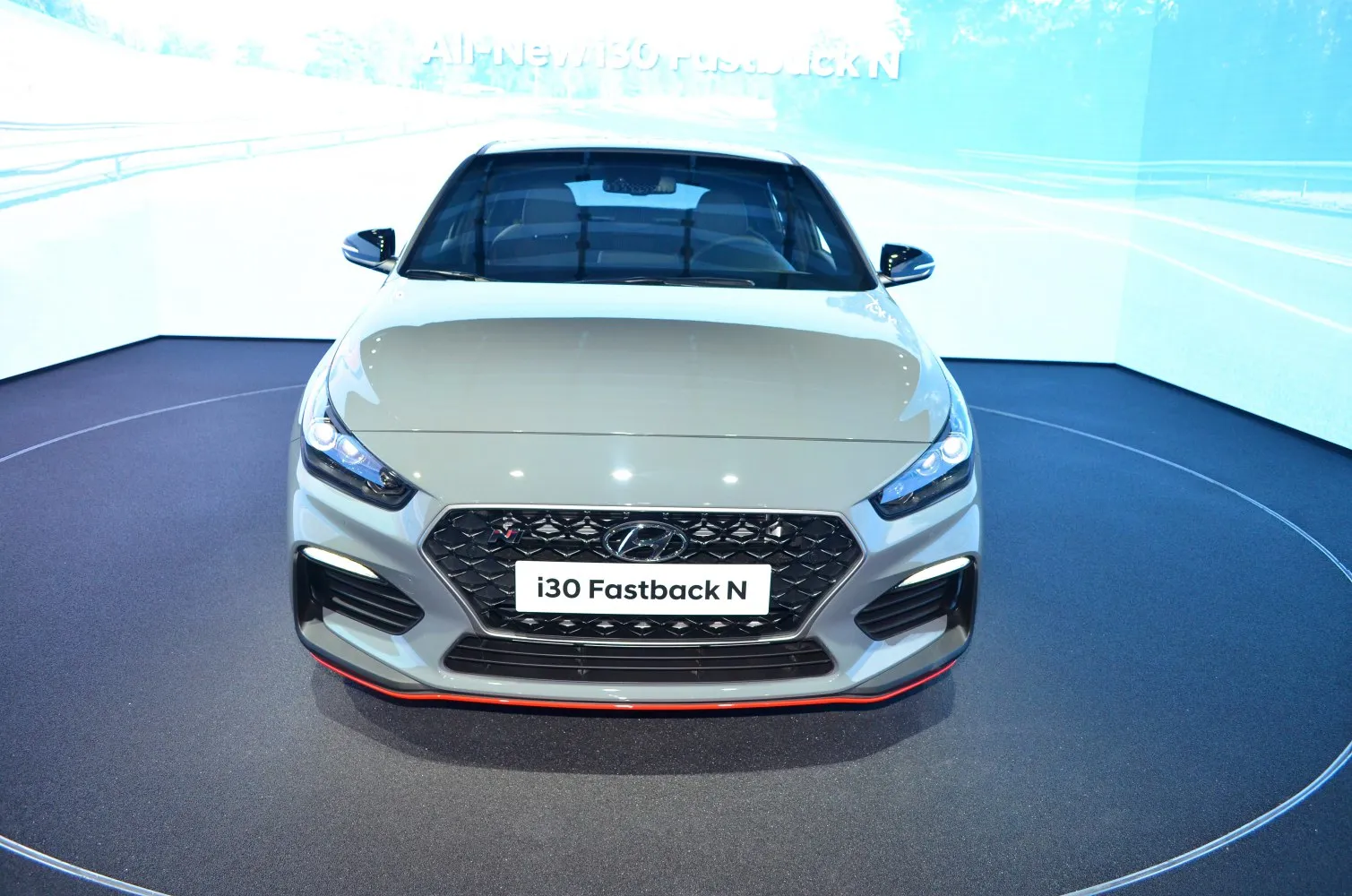
The Hyundai i30 III Fastback, produced from 2017 to 2020, is a stylish compact with a fastback body style, offering a five-door design with seating for five passengers. It is aimed at those seeking an elegant car with a sporty character, combining functionality with attractive design. It stands out with its dynamic lines that give it a unique style, as well as a practical interior, making it an ideal choice for both younger drivers and families needing a versatile everyday vehicle.

The Hyundai i30 III Fastback offers a variety of powertrains, including petrol and diesel engines, providing power outputs ranging from 120 to 275 hp. The lineup includes economical units such as the 1.0 T-GDI with 120 hp, as well as more dynamic options, including the sporty N versions with the 2.0 T-GDI engine producing 250 hp and the N Performance variant with 275 hp. Both manual and automatic (DCT) transmission options are available, ensuring excellent performance and user comfort. These diverse options allow drivers to tailor the car to their own needs and preferences.

The Fastback features front-wheel drive, which provides stable handling and good traction. It performs excellently in urban conditions due to its agility, and it offers comfort on longer journeys. Advanced driver assistance systems, such as lane departure warning, emergency braking system, and adaptive cruise control, enhance safety and comfort while driving. Additionally, modern multimedia technologies provide entertainment and connectivity on every trip.

While the Hyundai i30 Fastback is praised for its reliability, there are known cases of minor issues with electronics, particularly concerning infotainment systems. Although servicing costs are generally acceptable, more technologically advanced versions may involve slightly higher maintenance expenses. Potential buyers should also be aware of the DCT dual-clutch transmission, which in some cases may require service attention.

The Hyundai i30 III Fastback is an attractive option for those seeking a car that combines modern, sporty design with practicality and advanced technologies. With a variety of powertrains, a comfortable interior, and a high level of equipment, it stands out in the compact segment. Its unique features and excellent value for money make it a worthy choice for a wide range of drivers.